Loading...
Subscribe to Our Newsletter
Get the latest updates delivered straight to your inbox.

The ultimate L&D solution for upskilling your workforce.


© 2026 SkillUp MENA, Inc. All rights reserved
Subscribe to Our Newsletter
Get the latest updates delivered straight to your inbox.
The ultimate L&D solution for upskilling your workforce.
© 2026 SkillUp MENA, Inc. All rights reserved

 Share :


VILT in Iraq: Designing Prework That Improves Discussion TimeA trainer in Baghdad sends a 20-page procedure to sixteen participants two days before a 90-minute VILT session and asks them to read it. On the day, she opens with a question about the procedure and meets silence. Three people admit they have not opened the file, so she summarizes it. Forty minutes later, the discussion she had planned finally begins, with the same two experienced colleagues doing most of the talking.
The problem is not the participants’ commitment. A reading pack gives people nothing to do, nothing to submit, and no reason to believe the trainer will notice whether they read it. Prework that improves discussion time works differently: it asks for a short piece of thinking, collects it before the session, and visibly uses it once the session starts.
This article shows trainers and facilitators in Iraq how to design prework for VILT, or virtual instructor-led training: a short task and a few questions that participants complete in advance, a deadline that leaves the trainer time to read the answers, and a session plan built on what those answers reveal.
What Good VILT Prework Looks LikeGood prework is small, active, and readable. It should take 15 to 20 minutes, ask participants to apply something rather than only read it, and produce an answer the trainer can see before the VILT session. A useful test: if the trainer could not change the session plan based on the responses, the prework is not doing its job.
The approach has a well-documented model in higher education. In Just-in-Time Teaching, described by Carleton College’s Science Education Resource Center, students answer brief web-based questions before class. After the deadline but before class begins, instructors examine the responses, select a representative sample to show in class, and build in-class activities that target the gaps the responses reveal. VILT prework borrows the same logic: the answers arrive before the session, and the session is shaped around them.
The Short TaskBuild the task around one decision the VILT session is meant to improve. Formats that work well include:
Include one case that is genuinely borderline. Disagreement on that case is what gives the live discussion something to work on.
The QuestionsAdd two questions at most. One asks about application, such as “Which part of this procedure will be hardest to apply in your branch, and why?” The other invites a question for the trainer: “What do you want answered in the session?” Both give the VILT trainer material that a reading pack never produces.
Keep one task per session. Prework is not a place to move the whole explanation out of the live time; a long module completed beforehand tends to arrive half-finished. In a series of VILT sessions, let the close of one session set the prework for the next, so that each task picks up exactly where the discussion stopped.
Collecting and Reading Responses Before the VILT SessionSet the deadline 24 to 48 hours before the VILT session, so there is time to read and adjust. Use a simple form that works on a phone and records each answer against the task, not a reply-all email thread.
Then read the responses with three questions in mind:
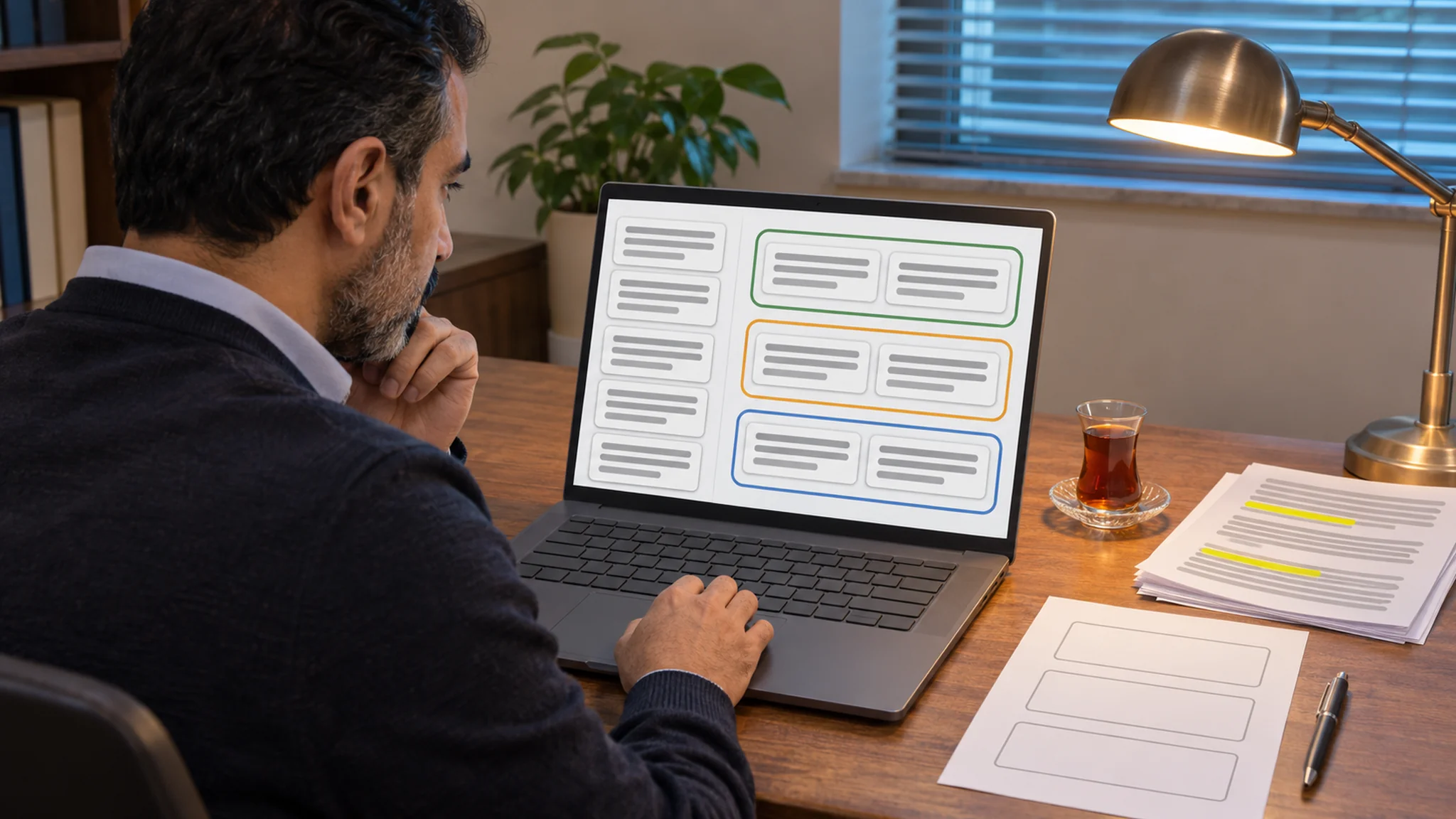
Choose two or three responses to show in the session: a strong one and one or two typical mistakes, with names removed. Note who has not submitted, so that you can plan a quick catch-up rather than discovering it live. If a producer or co-host supports your VILT sessions, they can collect the responses, remove names, and prepare the count, leaving the trainer to read the reasoning.
Using Prework Inside the VILT SessionPrework only improves discussion time if participants see it used. Open the VILT session with the results: how the group answered the borderline case, shown as a simple count, and two anonymized responses that reached different decisions. Then ask participants to explain the reasoning on each side before the trainer adds anything.
Do not spend VILT time re-teaching the material everyone got right; confirm it in one sentence and move on. Answer the grouped questions at the point in the session where they fit, and refer back to participants’ own examples from the application question. If the session also includes practice in rooms, the prework cases can become the first round of attempts; see our guide to facilitating VILT through practice attempts.
For participants who did not submit, prepare a one-page catch-up card with the borderline case and the key rule, and pair them with someone who did when the discussion moves to small groups. Do not single them out in front of colleagues.
Getting Participants to Complete VILT PreworkCompletion depends less on reminders than on design and signals. Research on the flipped classroom offers a modest lead: a systematic review and meta-analysis by Låg and Sæle, published in AERA Open, found a small overall effect of flipped teaching on learning, and some support for the idea that the benefit may increase slightly when testing students’ preparation is part of the design. The studies come from higher education, so treat this as a direction rather than a promise.
In workplace VILT, a light version of “testing preparation” is simply the submitted task, checked and used. Other signals help too:
After the first session, participants who saw their own answers shape the discussion are far more likely to complete the next task. That is the strongest argument for keeping prework short and using every response.
A Hypothetical Example: Short-Dated Stock at a Pharmaceutical DistributorThe following example is hypothetical and is included only to illustrate the method.
A pharmaceutical distributor with warehouses in Baghdad and Basra has revised its internal procedure for orders that can only be filled with short-dated stock. Sixteen order desk and customer service staff will attend a 90-minute VILT session on the change.
Two days before the VILT session, participants receive a two-page summary and a short task: classify three pharmacy orders under the new procedure and give one reason for each, then answer one application question and submit one question of their own. The third order is borderline: a regular customer accepts short-dated stock by phone but has not confirmed in writing.
The responses arrive the evening before. All participants classify the first two orders correctly, but 9 of the 16 accept the phone confirmation on the third. The questions fall into three themes: written confirmation, partial deliveries, and what to tell sales representatives.
The trainer drops the planned explanation of the first two cases and opens the VILT session with the split on the third order and two anonymized answers. The operations manager explains why written confirmation is required, and the rest of the session works through partial deliveries and the message for sales representatives, the two themes participants raised themselves.
Practical Points for VILT in Iraqi OrganizationsLanguage of the PreworkWrite the task in the language participants read most comfortably. If some participants read Kurdish more comfortably than Arabic, or if system and product terms appear in English, prepare the prework accordingly and keep system terms exactly as they appear on screen. Allow answers in whichever language people write best; what matters is the decision.
Phones and ConnectionsKeep VILT prework light enough to open and complete on a phone, with no large files or videos. Wider connectivity and access questions are a separate design task; for that, see our guide to planning access for teams on uneven connections.
Personal Data in ResponsesPrework answers are linked to named employees. Collect only what the VILT session needs, use invented data in every case, and remove names before showing any response to the group.
SummaryPrework improves discussion time when it asks for a short piece of thinking, arrives before the VILT session and is visibly used once the session starts. Design one task around a decision, include a borderline case, add one or two questions, set a deadline that leaves time to read the answers, and build the session around where participants split.
Start with your next VILT session: replace the reading pack with a 15-minute task and one question, and open the session with what the answers show. If an external trainer will run the session, check how they plan to use prework; our article on evaluating guest trainers for Iraqi VILT sessions covers what to ask.
Click here. If you are planning VILT for teams in Iraq and would like to talk through prework, session design, or the use of participants’ responses, the SkillUp MENA team can discuss your requirements with you.