Loading...
Subscribe to Our Newsletter
Get the latest updates delivered straight to your inbox.

The ultimate L&D solution for upskilling your workforce.


© 2026 SkillUp MENA, Inc. All rights reserved
Subscribe to Our Newsletter
Get the latest updates delivered straight to your inbox.
The ultimate L&D solution for upskilling your workforce.
© 2026 SkillUp MENA, Inc. All rights reserved

 Share :


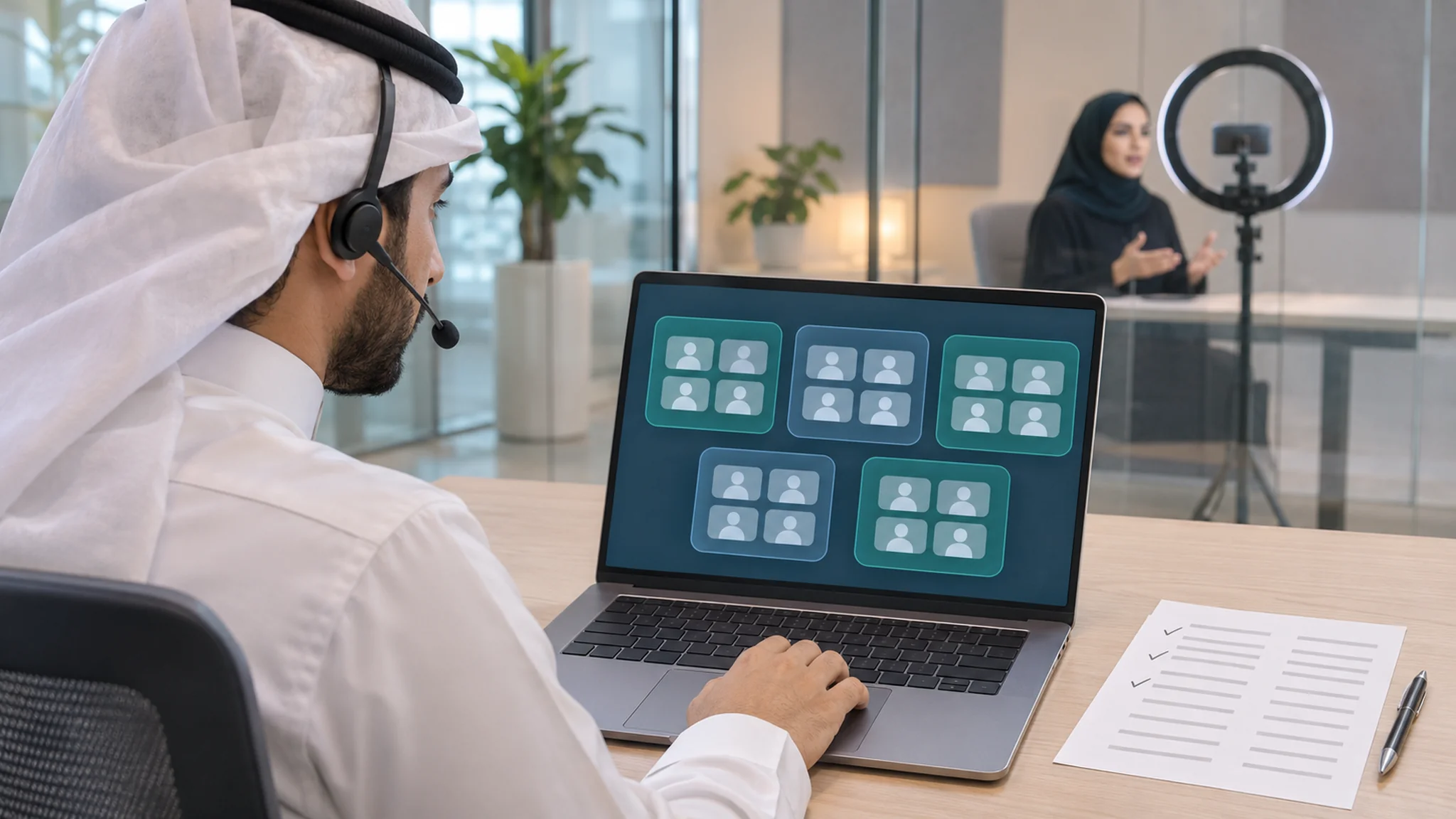
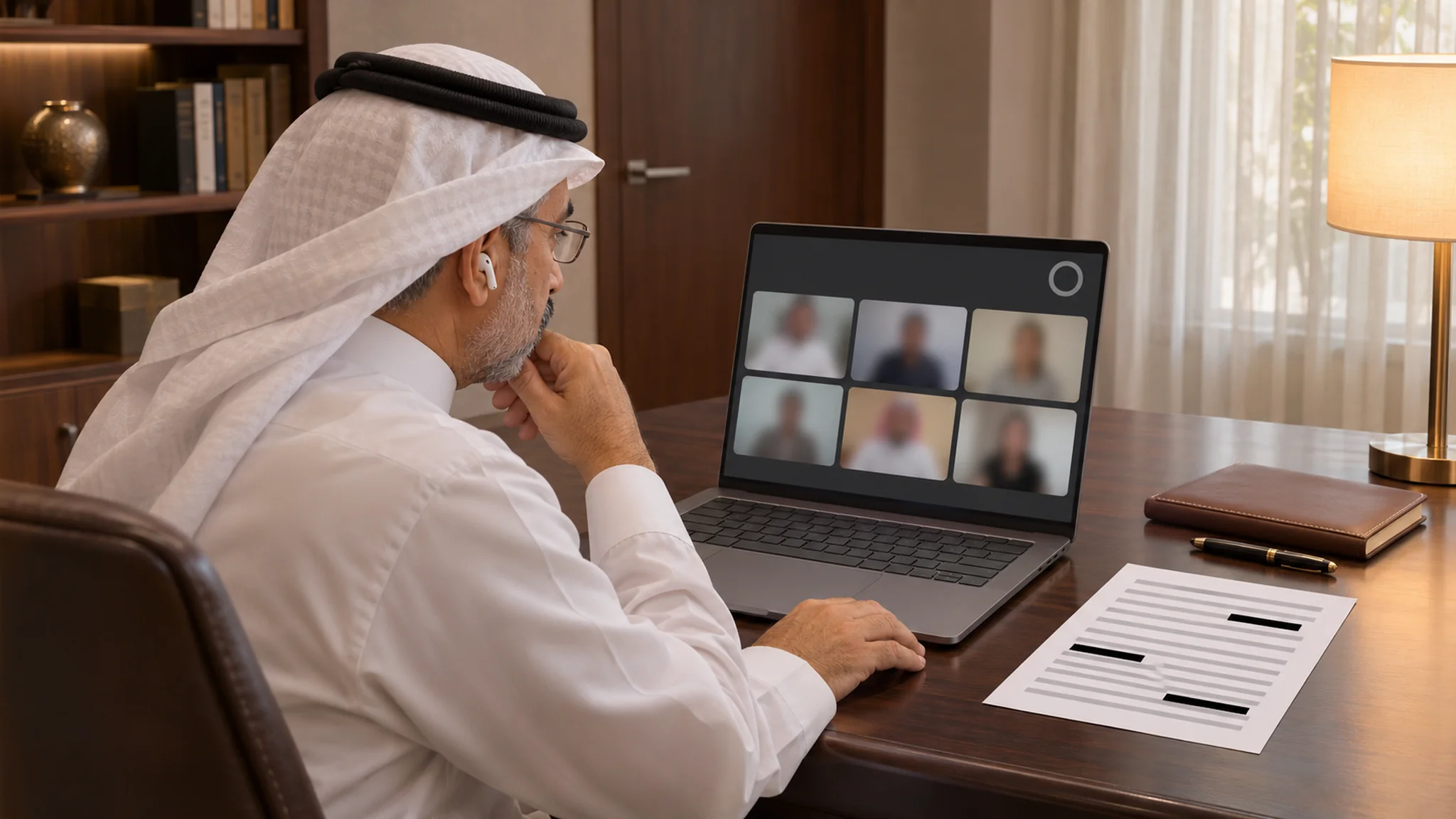
Managing Sensitive Discussions in Saudi Leadership VILTHalfway through a leadership VILT session for directors at a Saudi company, the facilitator asks for a recent people decision that was hard to make. A director describes a real case in detail: the name of the manager involved, the department, and the reasons the decision is still being contested. The session is being recorded by default, the chat holds two follow-up comments about the same person, and one participant has joined from a shared office. Nobody intended harm, but sensitive information has just travelled further than anyone planned.
Leadership development needs real dilemmas: performance decisions, restructuring, conflicts between departments, plans that are not yet announced. Those are exactly the topics that make VILT delivery risky, because recordings, chat logs, shared files, and the room around each participant all extend where the discussion goes.
This article shows facilitators and training teams in Saudi organizations how to run leadership VILT, or virtual instructor-led training, on sensitive subjects: building de-identified cases, setting recording and participation rules from organizational policy, and running each session so that discussion stays candid without exposing people or plans. It is practical guidance, not legal advice.
Why Leadership VILT Needs Its Own RulesIn a classroom, a confidential discussion ends when the door opens. In VILT, it can continue in several places at once:
None of this means leadership VILT should avoid hard topics. It means the rules that a classroom leaves unspoken must be written down and agreed before the first session. Those rules belong to the organization, not to the facilitator: set them with legal, data protection, HR and information security colleagues, and apply them consistently across the program.
Build De-Identified Cases for Leadership VILTThe safest sensitive discussion uses a case that is real in its dilemma but not in its details. De-identification is more than deleting names. NIST’s report on the de-identification of personal information describes it as removing identifying information so that data cannot be linked with specific individuals, and notes that some de-identified data can sometimes be re-identified. In a small leadership group whose members know the organization well, that risk is high, so check cases carefully:
Then run a recognition test. Ask someone who knows the organization but did not write the case whether they can tell who or what it is about. If they can, change more details. Cases built this way also make good practice material outside VILT; for the scenario side, see our guide to choosing feedback scenarios to practise in Saudi soft skills training.
Participants in leadership VILT will still want to bring their own situations. Invite them to do so in de-identified form only, and give them a simple template in advance: the role, not the person; the type of decision, not the department; the dilemma, not the history.
Set VILT Recording Rules from Organizational PolicyDecide recording before the VILT program starts, not at the start of each session. The questions are simple, even if the answers need advice:
In Saudi Arabia, data minimization is a useful starting point for these decisions. Article 19 of the Implementing Regulation of the Personal Data Protection Law, published by SDAIA, requires the controller to collect only the minimum personal data necessary to achieve the purpose of processing, and to retain only the minimum necessary. A practical reading for training teams: if a recording of a sensitive discussion is not needed for a defined purpose, do not make it. How the law applies to your recordings, chat logs, and records is a question for your organization’s legal and data protection advisers.
Many leadership VILT programs settle on a middle path: record the facilitator’s input for participants who miss a session, and leave case discussions and breakout work unrecorded. Check your own VILT platform’s settings, because what is captured by default differs from one configuration to another.
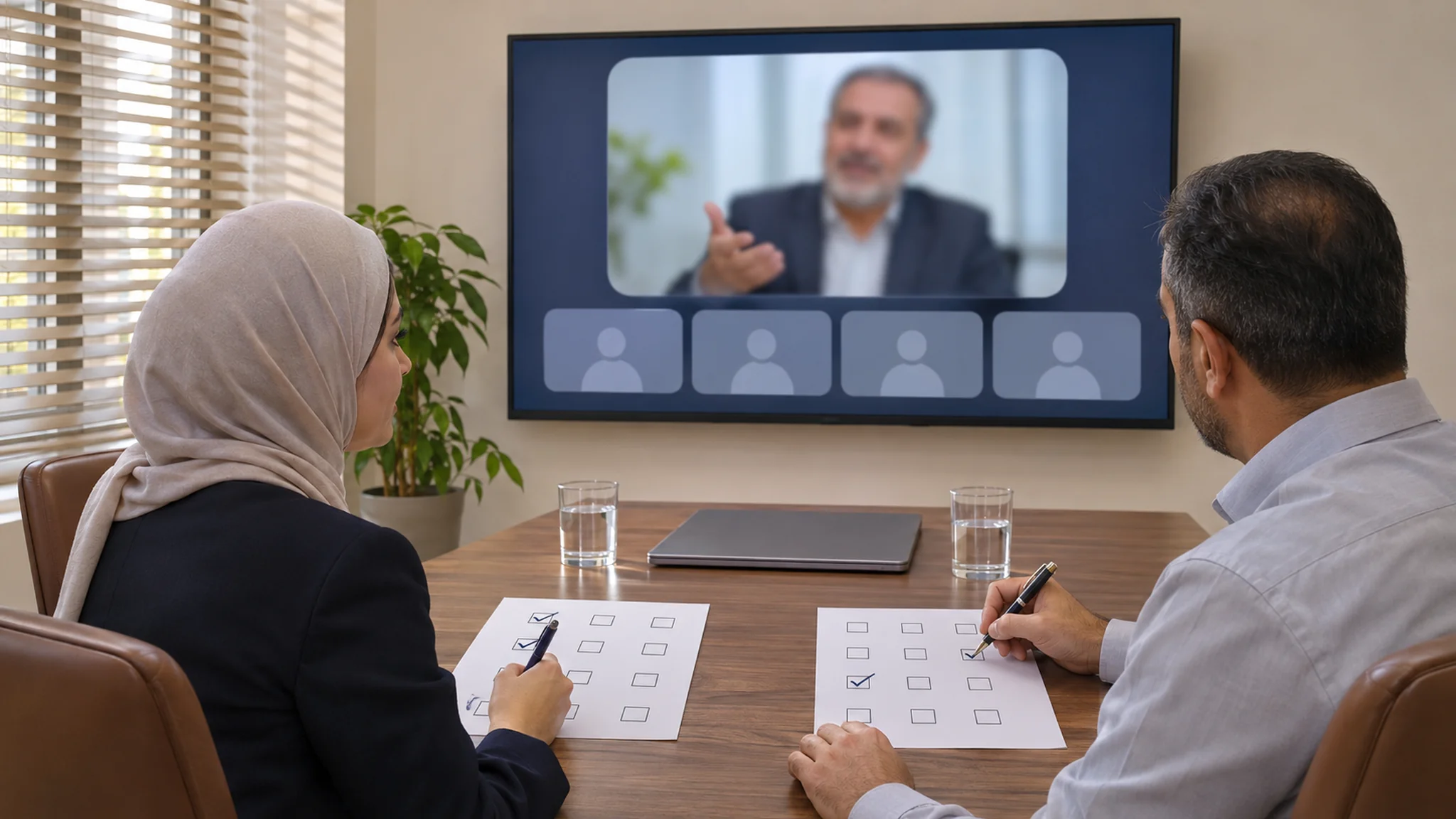
Agree Participation Rules with the VILT GroupRecording rules protect what is stored; participation rules protect what is said. Write a short agreement and read it aloud at the start of each leadership VILT session:
Be clear about the limits of confidentiality too. A leadership program is not a counseling service. If a participant discloses something that the organization’s policy requires to be reported, such as suspected misconduct, the facilitator follows that policy. Saying this at the start avoids an awkward moment later.
Running a Sensitive VILT SessionOn the day, the technical controls matter as much as the agreement. Admit participants from a waiting room against the approved list, confirm that recording is in the agreed state before any case is discussed, and keep shared files to the session’s own folder. A producer can handle these checks while the facilitator focuses on the group; see our guide to preparing a virtual classroom producer.
During a VILT discussion, the facilitator needs a neutral way to redirect, such as “Let’s keep this at the level of the role and the decision.” Used early and calmly, it protects the person speaking as much as the people they are describing.
Breakout rooms need the same care. The facilitator cannot hear every room, so give each room the de-identified case in writing, repeat the agreement before the rooms open, and ask for an output that names roles, not people. In leadership VILT, that short reminder before every breakout is worth repeating.
Close each VILT session with three steps: remind participants of the non-attribution rule, confirm what will be kept and for how long, and clear the chat and shared whiteboards if your policy allows.
A Hypothetical Example: A Restructuring Dilemma in a Leadership ProgramThe following example is hypothetical and is included only to illustrate the approach.
A manufacturing group in Saudi Arabia runs a six-month leadership program for 14 directors, with monthly VILT sessions. The fourth VILT session focuses on leading teams through restructuring, a topic several directors are living through.
The learning team writes a composite case from three past situations: a regional sales unit merged with a customer service team, two supervisors competing for one role, and a delayed announcement. Department names, locations, numbers, and dates are all changed, and an HR business partner who knows the group confirms that she cannot identify any real case.
Following the group’s policy, only the facilitator’s 15-minute opening input is recorded; the case discussion and the breakout rooms are not. When one director begins to describe a real supervisor by name, the facilitator redirects to the role and the decision, and the director continues without the detail. The session ends with the non-attribution reminder and the facilitator clearing the shared whiteboard.
Practical Points for Leadership VILT in Saudi OrganizationsSeniority in the RoomCandor changes when the most senior leader is present. For sensitive topics, consider VILT sessions for peers at the same level, or agree in advance how senior sponsors will take part.
LanguageLeadership VILT groups in Saudi organizations may move between Arabic and English. Write the participation agreement in the language the group uses, so that every rule is understood the same way.
External FacilitatorsIf an external provider facilitates your leadership VILT, share the recording and participation rules before the program begins and confirm in writing how the provider handles cases, files, and any recordings.
SummaryLeadership VILT can handle sensitive topics well when the rules are designed before the first session. Use cases that keep the dilemma but remove direct and indirect identifiers, test them for recognition, set recording rules from organizational policy with data minimization in mind, and agree participation rules that the whole group hears at the start.
Start with one leadership VILT program: write the recording decision and the participation agreement, de-identify the first two cases, and brief the producer on the technical checks. If a provider will deliver the program, build these rules into the agreement; our guide to what to specify in a custom corporate training scope in Saudi Arabia covers how.
Click here. If you are planning a leadership VILT that will touch sensitive topics and would like to talk through case preparation and session rules, the SkillUp MENA team can discuss your requirements with you.