Loading...
Subscribe to Our Newsletter
Get the latest updates delivered straight to your inbox.

The ultimate L&D solution for upskilling your workforce.


© 2026 SkillUp MENA, Inc. All rights reserved
Subscribe to Our Newsletter
Get the latest updates delivered straight to your inbox.
The ultimate L&D solution for upskilling your workforce.
© 2026 SkillUp MENA, Inc. All rights reserved

 Share :


Evaluating Guest Trainers for Iraqi VILT SessionsAn Iraqi company needs a specialist trainer for two VILT sessions that its own team cannot deliver. One candidate has an impressive CV and sends a polished recording of a conference webinar. The company books him. In the first session, he lectures for most of the time, misses questions in the chat and opens breakout rooms without saying what to produce. The content was right; the facilitation was not.
A CV shows what a trainer knows, and a recorded webinar shows how they present. Neither shows whether they can run an interactive live online session with your participants, on your platform, within your time. That is the question to answer before booking.
This article shows training teams in Iraq how to evaluate a guest trainer for VILT, or virtual instructor-led training, using two pieces of evidence: a written activity plan for the actual session and a short live facilitation sample with your own staff. It concerns one trainer for specific sessions, not a framework for standardizing quality across all your trainers.
Why CVs and Webinar Recordings Are Not Enough for VILTPresenting and facilitating are different jobs. A webinar is mostly one person talking to many. A VILT session for employees needs a trainer who sets tasks, reads the chat, draws in quiet participants, gives clear instructions before breakout rooms, responds to answers, and keeps time, often while something technical goes wrong.
These are observable behaviors, which is good news: you can ask to see them before you commit. A recording of a past VILT session is more useful than a webinar, but it still shows a different group, a different topic, and a session that went well enough to share. The two requests below take some effort from the candidate, so make them only once the shortlist is down to two or three trainers whose subject expertise is not in doubt.
Treat candidates fairly. Give every trainer the same brief, the same participant profile and the same VILT platform, agree in advance whether the sample is paid, and explain how you will decide. A clear, even-handed process makes serious trainers more willing to show real work, and makes your comparison stronger.
Request 1: The VILT Activity PlanSend each shortlisted trainer a short brief: the participants, the objective of the VILT session, its length, and your platform. Ask them to return a minute-by-minute activity plan showing, for each segment, what participants will do, which platform features will be used, what materials or prework are needed, and how understanding will be checked.
Read the plan for alignment. Carnegie Mellon University’s Eberly Center advises that objectives, assessments, and instructional strategies be closely aligned so that they reinforce one another, and warns that misaligned assessments can undermine both motivation and learning. In a VILT plan, alignment shows up in a few simple questions:
That last question is a quick test of design maturity; our guide to designing prework that improves discussion time explains what good use looks like. A plan that is really a list of slide titles tells you how the session will feel before you see it.
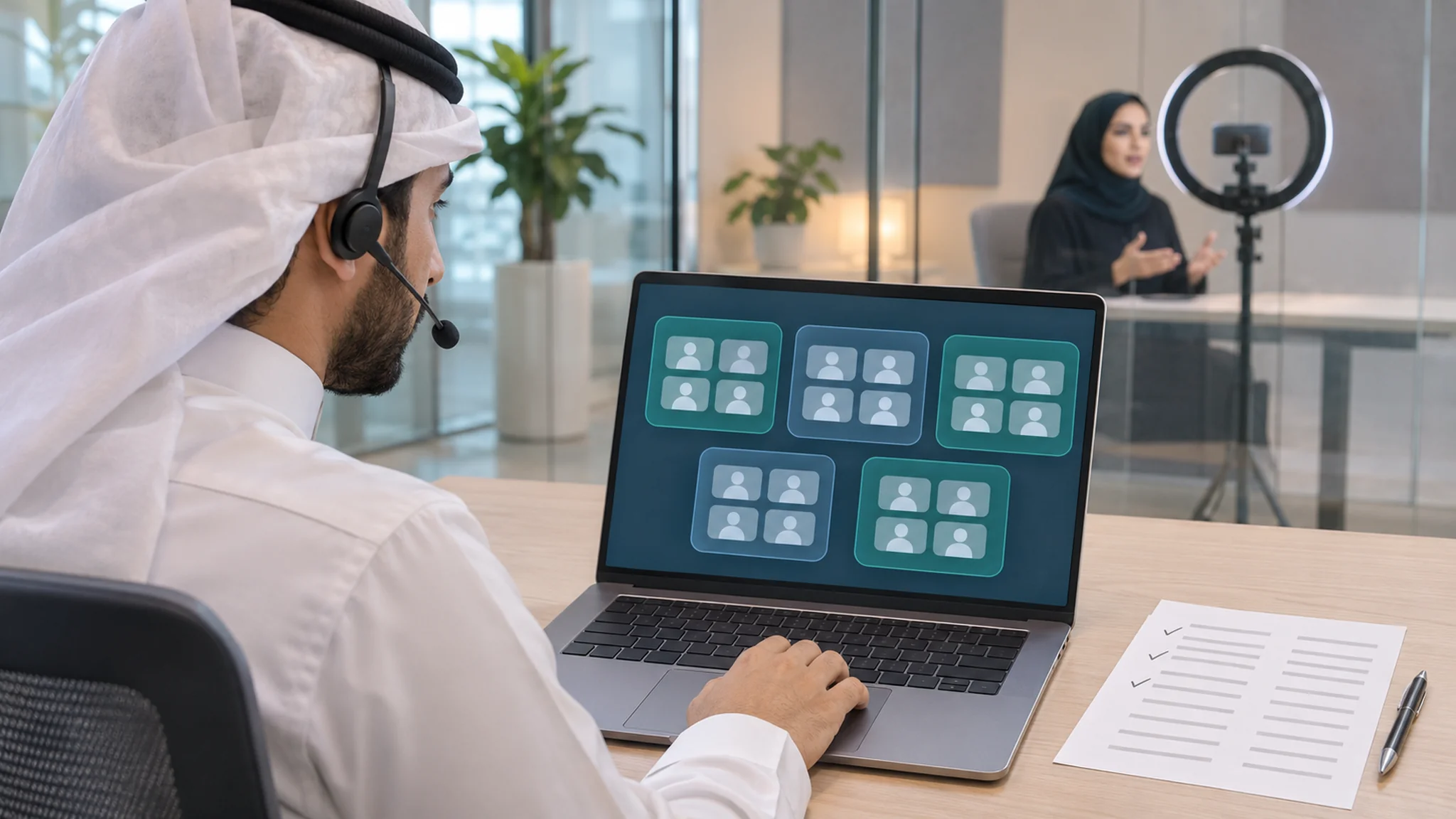
Request 2: The VILT Facilitation SampleAsk each remaining candidate to run a 20- to 30-minute segment from their plan, live, on your VILT platform, with four to six of your actual target participants. The segment should include at least one interaction: a question to the group, a poll, or a short breakout task.
The logic is that of a work sample. Guidance from the US Office of Personnel Management describes work sample tests as tasks that mirror the work itself, with performance that relates highly to performance on the job, scored by trained assessors who observe behavior.
It also notes that such samples take time to develop and need people to observe. That guidance is written for US federal hiring, but the principle transfers well: for a guest trainer, the job is facilitating a VILT session, so the sample should be exactly that.
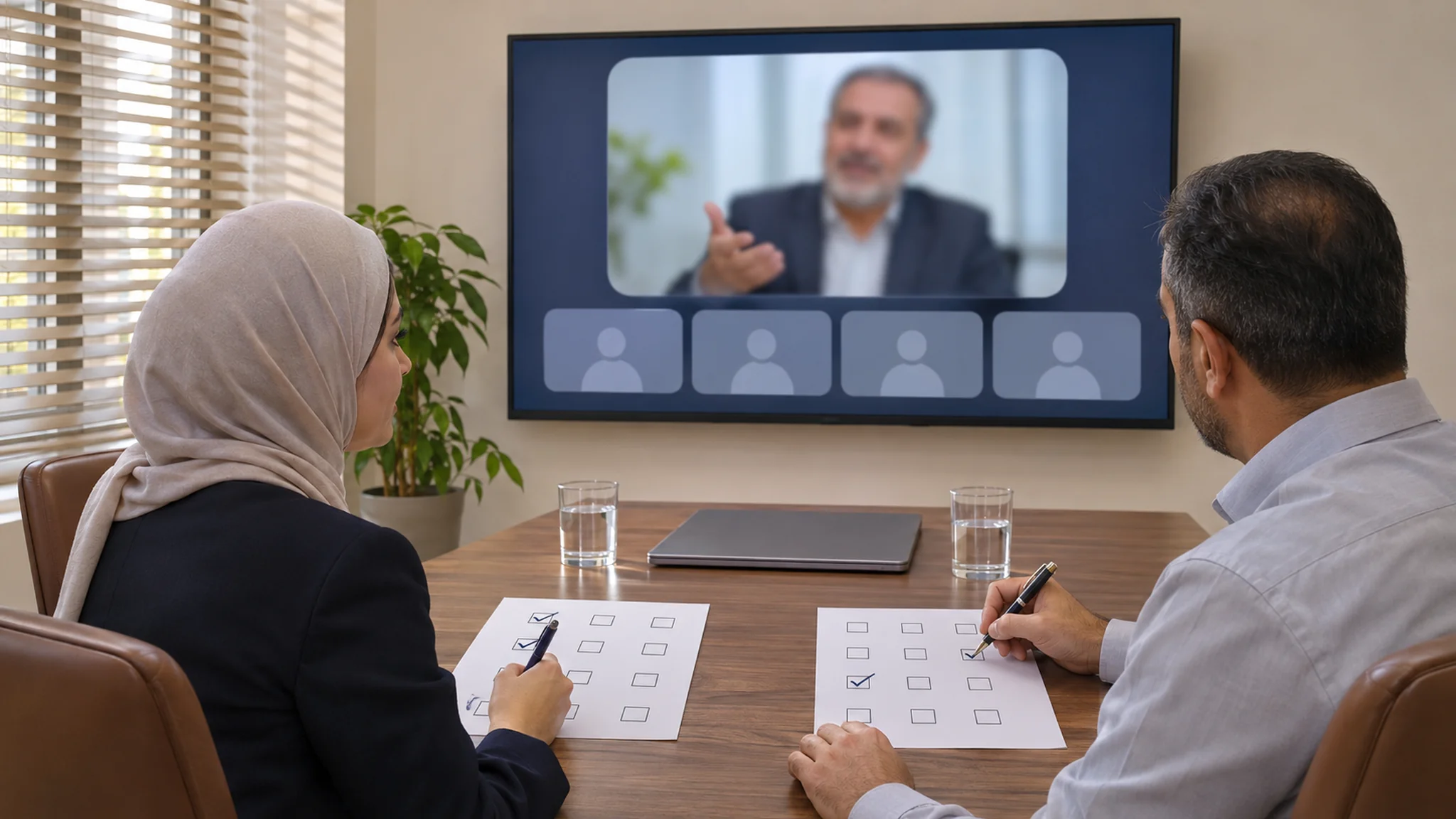
What to Observe in the VILT SamplePrepare a one-page observation sheet before the sample, with criteria such as:
Who ScoresUse two observers, ideally someone from the training team and a manager of the target team, scoring separately on the same sheet before comparing notes. Afterwards, ask the participants two questions: what will you do differently tomorrow, and was anything unclear? Their answers are often the most telling evidence of all. If you work with a producer, let them run the VILT platform during the sample, so that observers watch the trainer rather than the technology.
Comparing VILT Candidates and DecidingDecide in advance which criteria are must-pass. For most VILT sessions, clear instructions, real participant activity, and language fit are non-negotiable; polish is not. Then compare candidates on the same sheet and look for red flags:
The decision has three possible outcomes: book the trainer; book with conditions, such as revising one segment or working with your producer; or do not book. If no candidate passes, consider whether a colleague could be developed to deliver the session instead; our guide to VILT for internal trainers in Jordan describes a practice-based route.
A Hypothetical Example: Schedule Updates at a Construction CompanyThe following example is hypothetical and is included only to illustrate the method.
A construction company with projects in Baghdad and Basra needs two VILT sessions for 18 planning engineers on updating project schedules after delays. It shortlists two external trainers with strong planning backgrounds.
Trainer A returns an activity plan of 22 slide titles and one closing quiz. Trainer B returns a plan built around three delay cases typical of building projects, a prework task, and a check-in in which each engineer re-sequences a short schedule alone.
In the 25-minute VILT samples, Trainer A presents clearly but answers none of the four chat questions and runs eight minutes over. Trainer B opens with a case, uses a poll, settles a late joiner, and finishes three minutes over time. Both observers score Trainer B higher on six of seven criteria, and the participants say they would apply her re-sequencing check. The company books Trainer B, on condition that she shortens the second segment and works with its producer.
After the DecisionWrite the agreed activity plan into the booking, together with any conditions, so that the session you evaluated is the session you receive. Then move from evaluation to preparation: brief the trainer on participants, rehearse on the platform, and agree time limits, as described in our guide to preparing guest experts for VILT. Keep the observation sheets too: they give you a baseline for reviewing the booked VILT sessions once they run.
Practical Points for Evaluating VILT Trainers in IraqLanguageTeams in Iraq may work in Arabic, Kurdish, or a mix, with technical terms in English. Ask candidates to run the VILT sample in the language your participants will use, and include at least one participant who will tell you honestly whether it worked.
The Trainer’s Own ConnectionA guest trainer joining from another city or country depends on their own connection. The sample is a chance to see it under real conditions; agree on a backup, such as a telephone line, for the booked VILT sessions.
Recording the SampleRecording the sample helps observers compare candidates, but it shows your employees too. Ask everyone’s consent, use invented data in the cases, and delete the recordings once the decision is made.
SummaryChoosing a guest trainer for VILT on a CV or a webinar recording leaves the key question open. Ask the shortlisted trainers for an activity plan for the actual session and read it for alignment; then watch a short live facilitation sample with your own participants and score it on a prepared sheet.
Set must-pass criteria before the VILT samples, use two observers, and decide between booking, booking with conditions, or not booking. The evidence you collect becomes the basis of the booking, and of the preparation that follows.
Click here if you want Skillup MENA to help you.