Loading...
Subscribe to Our Newsletter
Get the latest updates delivered straight to your inbox.

The ultimate L&D solution for upskilling your workforce.


© 2026 SkillUp MENA, Inc. All rights reserved
Subscribe to Our Newsletter
Get the latest updates delivered straight to your inbox.
The ultimate L&D solution for upskilling your workforce.
© 2026 SkillUp MENA, Inc. All rights reserved

 Share :


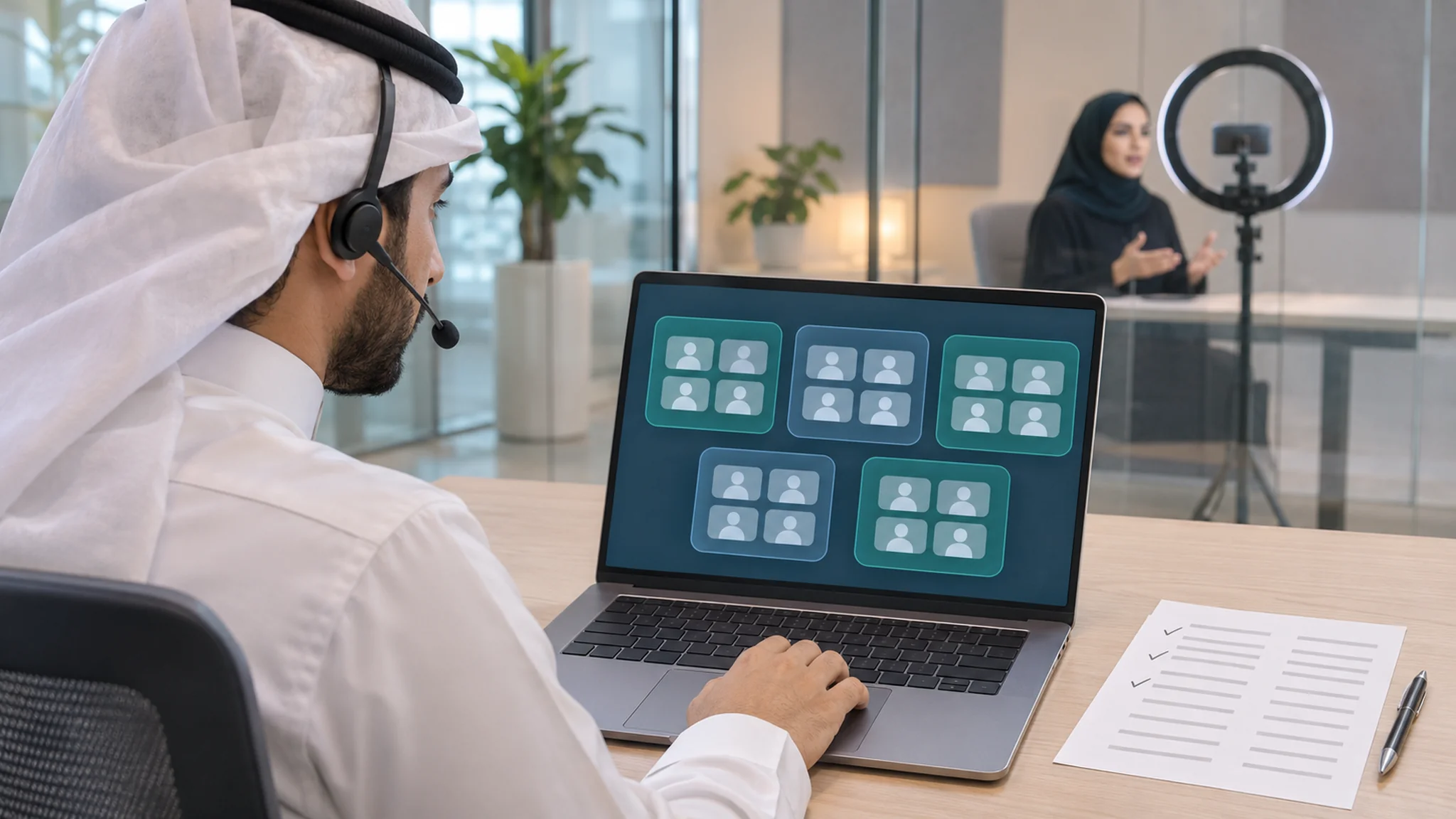
Designing Multilingual VILT for Moroccan TeamsA logistics company runs a VILT session for supervisors from its sites in Casablanca, Tangier, and Agadir. The slides are in French, the facilitator explains in a mix of Darija and French, and the chat fills with messages in French and in Arabic script. Two supervisors who write more comfortably in Arabic say almost nothing. At the end, the group output, a checklist in French, has been written by one person.
Nobody chose this language pattern. It happened by default, and it decided who could contribute. In a multilingual team, every VILT session makes language decisions; the only question is whether they are made deliberately.
This article shows facilitators and training teams in Morocco how to design multilingual VILT, or virtual instructor-led training, in three layers: the language of the materials, the language of discussion, and the language of outputs, followed by a participation check to see whether the plan worked. Because language use differs from one company and team to another, every language point is a condition to check, not an assumption.
Start with a Language Map of the VILT GroupMorocco’s 2011 Constitution, in Article 5, makes Arabic the official language of the State and states that Tamazight is also an official language; it also refers to mastering the foreign languages most used in the world. Beyond that, the languages a given team uses at work vary by company, site, and role. Some teams may write procedures in French and discuss them in Darija; others may work mainly in Arabic, or include colleagues who think most easily in Tamazight.
So map before you design. A three-question form before the VILT session is enough:
Add an optional comment box for anything else, such as a participant who reads French well but hesitates to speak it in front of colleagues. The answers rarely show one language for everything; they show a pattern per layer, which is what the design needs.
Layer 1: VILT MaterialsDecide the language of each material separately, starting from how it is used at work:
Send the materials before the VILT session, so that participants can read them at their own pace and in the language they prefer. If the program also includes eLearning, keep the term sheet aligned with the eLearning glossary; our article on Arabic and French eLearning for Moroccan companies covers building a shared term base.
Before the VILT session, ask two participants from different sites to read the task cards and the term sheet and tell you what they would do. If either hesitates over an instruction, rewrite it; a five-minute check now saves a confused breakout round later.
Layer 2: Discussion in the VILT SessionDiscussion is where language decides who takes part. A few rules help every participant contribute in a multilingual VILT session:
Resist the urge to impose one language in the name of professionalism. In a VILT session, that usually silences the people whose practical knowledge you most need.
If the facilitator is less comfortable in one of the group’s languages, pair them with a co-facilitator who is. In VILT, the co-facilitator can follow the chat in that language, restate key points, and lead one of the breakout rooms. Plan for the extra time that restating takes: a multilingual VILT session usually needs fewer activities, not faster ones.
Layer 3: VILT OutputsDecide the language of each output by its real destination. If the real checklist, report or email is written in French, the final output should be in French too, because that is the skill at work. But let groups draft in whichever language helps them think, and make the final language step explicit, with time allowed for it.
When you review outputs, judge content and language separately, unless writing in that language is itself the objective. A correct decision written in imperfect French is a correct decision; a fluent output with the wrong decision is still wrong. Use templates whose field names match the real system, so that language is never the reason an output fails. In VILT, a few minutes of plenary to compare outputs in their final language also shows the group how the same decision reads in the language it will travel in.
The VILT Participation CheckA language plan is a hypothesis; the participation check tests it. There is a good reason to watch the balance of contributions. In laboratory studies of groups working on a range of tasks, Woolley and colleagues found that a general collective intelligence factor was not strongly correlated with members’ individual intelligence but was correlated with, among other things, the equality in distribution of conversational turn-taking. The findings are correlational and come from lab groups, but they support a simple practice: notice who is not contributing.
In a multilingual VILT session, the check has three parts:
Use the tally to adjust the VILT design, not to rate individuals. Some people are quiet for reasons that have nothing to do with language.
When a Provider Runs the VILT SessionsSuppose an external provider will deliver the VILT program; ask to see its language plan for the three layers and how its facilitator will check participation. A provider that can show which language each material, discussion, and output will use, and how it will notice silent participants, has thought about your team. For comparing providers more broadly, see our guide to choosing a corporate training center in Casablanca.
A Hypothetical Example: Returns Inspection Across Three SitesThe following example is hypothetical and is included only to illustrate the method.
A logistics company introduces a new procedure for inspecting returned goods at its sites in Casablanca, Tangier and Agadir, and plans a 90-minute VILT session for 15 supervisors. The language map shows that the procedure and the warehouse system are in French; most supervisors prefer to discuss in Darija, four write most comfortably in Arabic, and one notes that she follows best when key terms are also explained in Tamazight.
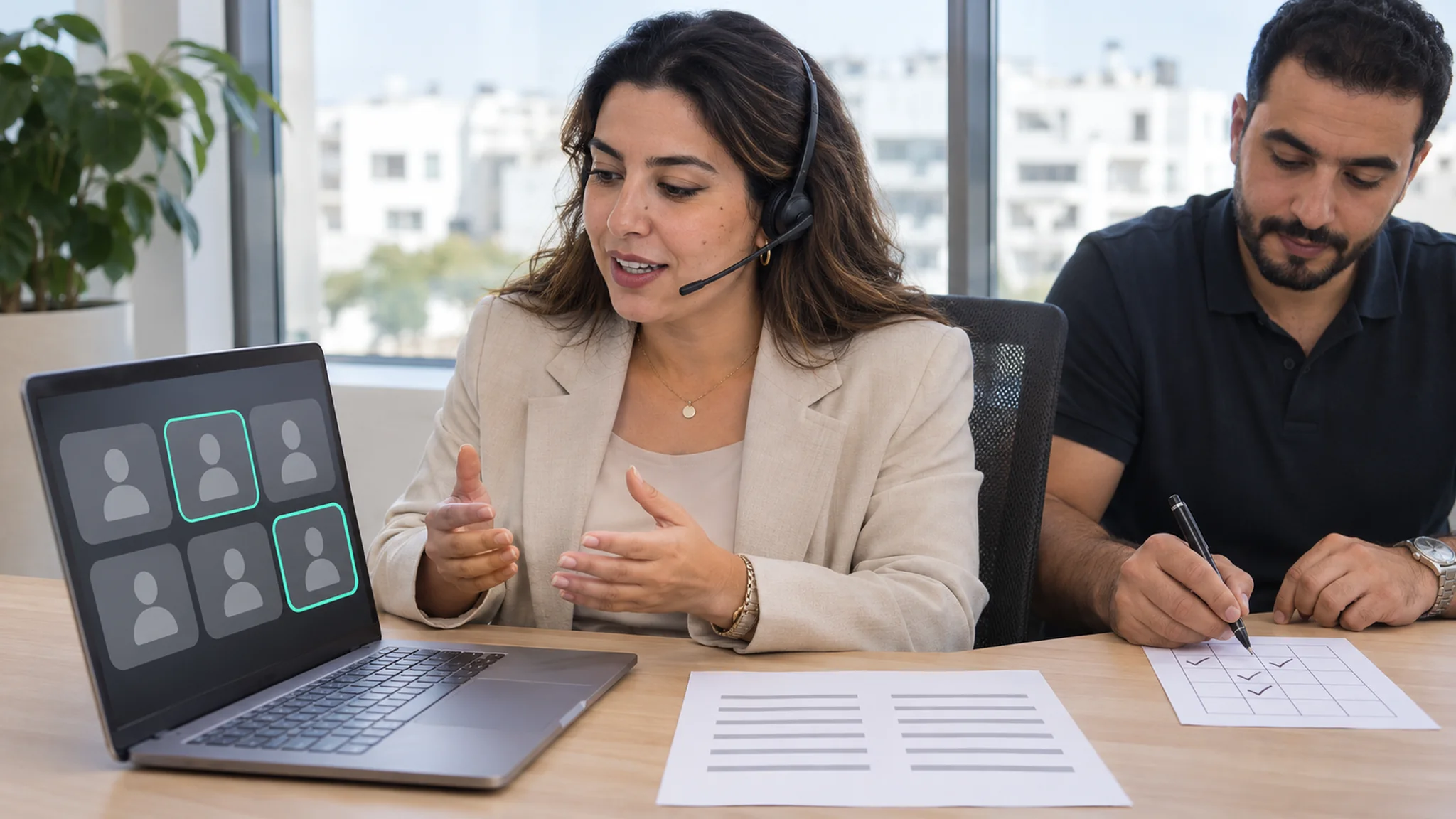
The case and the inspection form stay in French, with a two-column term sheet explaining each field in Arabic. Task cards are bilingual. The facilitator explains in Darija, restates each instruction briefly in French, and invites contributions in any language. Groups draft their inspection decisions freely, then complete the French form in the last five minutes of each round.
At the midpoint of the VILT session, the tally shows that the four supervisors who prefer Arabic have contributed only in chat. The facilitator asks one of them, in Arabic, to explain her room’s decision, and moves the Tamazight-speaking supervisor into a room with a colleague from her site who acts as a bridge. In the closing form, all but one participant say they could contribute in the language they wanted.
SummaryMultilingual VILT works when language decisions are made deliberately, layer by layer: materials in the language of real use, with a term sheet; discussion open to every language in the group, with restated instructions and planned rooms; and outputs in the language of their real destination, judged on content first.
Map the group before the session, run a participation check during and after it, and adjust the next VILT session from what you learn. If part of the practice moves into eLearning, the same care applies; see our guide to building a complaint decision activity for eLearning in Morocco.
Click here. If you are planning multilingual VILT for teams in Morocco and would like to talk through language plans, materials, or participation, the SkillUp MENA team can discuss your requirements with you.