Loading...
Subscribe to Our Newsletter
Get the latest updates delivered straight to your inbox.

The ultimate L&D solution for upskilling your workforce.


© 2026 SkillUp MENA, Inc. All rights reserved
Subscribe to Our Newsletter
Get the latest updates delivered straight to your inbox.
The ultimate L&D solution for upskilling your workforce.
© 2026 SkillUp MENA, Inc. All rights reserved

 Share :


Assessing a Qatar Training Provider's Follow-Up PlanThe proposal from a Doha training center looks complete. It has outcomes, a session plan, a named trainer, and, near the end, one line: ‘Includes eight weeks of post-training follow-up.’ When the HR manager asks what that means, the answer is a satisfaction survey after thirty days and an optional online session. The program is meant to change how store managers coach their staff every week. Nothing in that line will make it happen.
The follow-up plan is often the least examined part of a training center proposal, yet it decides whether a program reaches daily work. A review of training science summarized by the Association for Psychological Science notes that what happens before and after training is just as important for program success, and that employers should make sure transfer has occurred after training.
This guide gives HR and training procurement teams in Qatar three tests for the follow-up plan a training center proposes: whether the post-course tasks are real work, who reviews them and against what standard, and whether the plan can actually be carried out in your operation. Choosing the provider itself is a separate step; see the procurement questions for choosing a corporate training center in Doha.
What a Follow-Up Plan Should ContainThe Kirkpatrick Model describes Level 3, Behavior, as the degree to which people perform the critical behaviors in their work environment. It lists critical behaviors, performance support, and the performance environment as the components of that level, and calls an accountability and support package that encourages the intended behavior crucial to success, with examples such as manager check-ins and job aids. A follow-up plan is where a training center shows how it will contribute to that package.
A plan worth signing usually names:
Satisfaction surveys, certificates, and invitations to the training center’s future courses are not follow-up in this sense. They may be useful, but they do not help anyone perform the new behavior at work. When a training center offers ‘follow-up’ without the elements above, ask for them in writing before you compare prices.
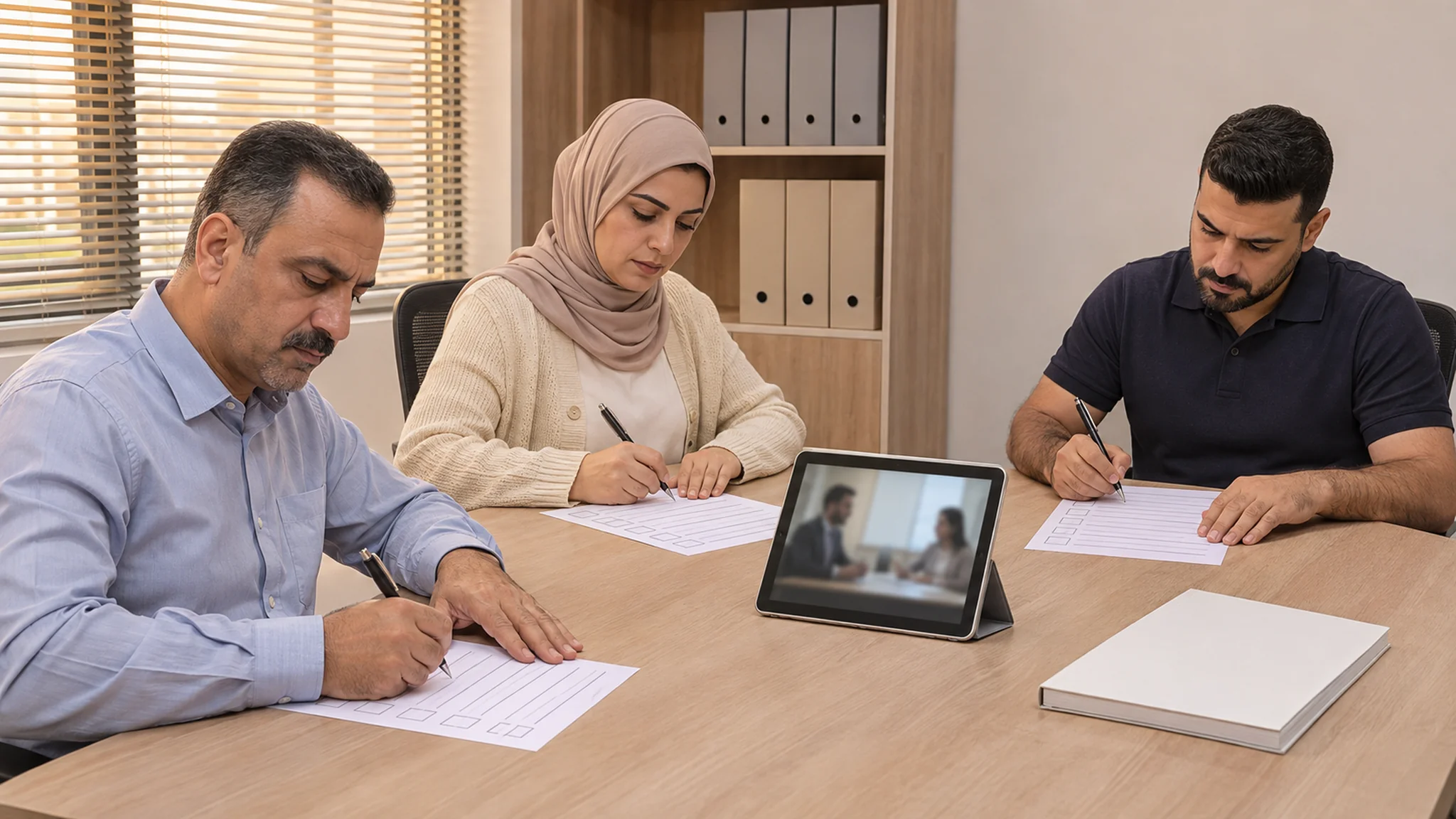
Test 1: Are the Post-Course Tasks Real Work?Read each task as if you were the participant on a busy Sunday morning. A good post-course task is part of the job rather than extra homework, produces something specific that can be reviewed, and is small enough to finish within a normal week. For store managers learning to coach, that could be a short summary of one coaching conversation held with a team member, using a template from the course.
Watch for weak tasks in a training center’s plan:
Timing matters as much as content. The Kirkpatrick Model treats participants’ confidence and commitment at the end of training as early predictors of what may happen back at work, so the first task should be agreed in the last session, while that commitment is fresh, and be due within days, not weeks. Later tasks can then build in difficulty. Ask the training center to show an example of each task as a previous participant completed it, with personal details removed.
Test 2: Who Reviews the Work, and Against What?A task that nobody reviews tends to fade within a few weeks. The plan should name who reviews each submission: the training center’s trainer, the participant’s manager, an internal coach, or a peer. Each option works, but each needs three things the plan must spell out:
Do the arithmetic. If fourteen participants each submit three tasks, that is forty-two reviews. A trainer who will spend ten minutes on each needs seven hours, concentrated in the weeks when tasks are due. Ask the training center whether those hours are included in the fee, and who covers them if the trainer is delivering elsewhere. If managers review, check that they have been briefed and have the standard; our article on reviewing group outputs beyond attendanceshows how output reviews can be organized.
Mixed models often work best: the training center’s trainer reviews the first task closely to calibrate quality, and managers take over the later ones using the same checklist.
Test 3: Can the Plan Actually Be Done Here?A plan can be well designed by the training center and still fail in your operation. Check it against the realities of your teams in Qatar:
Share these constraints with the training center before it finalizes the plan. A corporate training provider that adjusts deadlines and formats to your calendar is far more likely to see the tasks completed.
If participants attended a training center’s open course alone rather than as a team, feasibility is harder, because nobody around them shares the method. Our article on open courses or in-house trainingexplains why the return to work differs between the two formats.
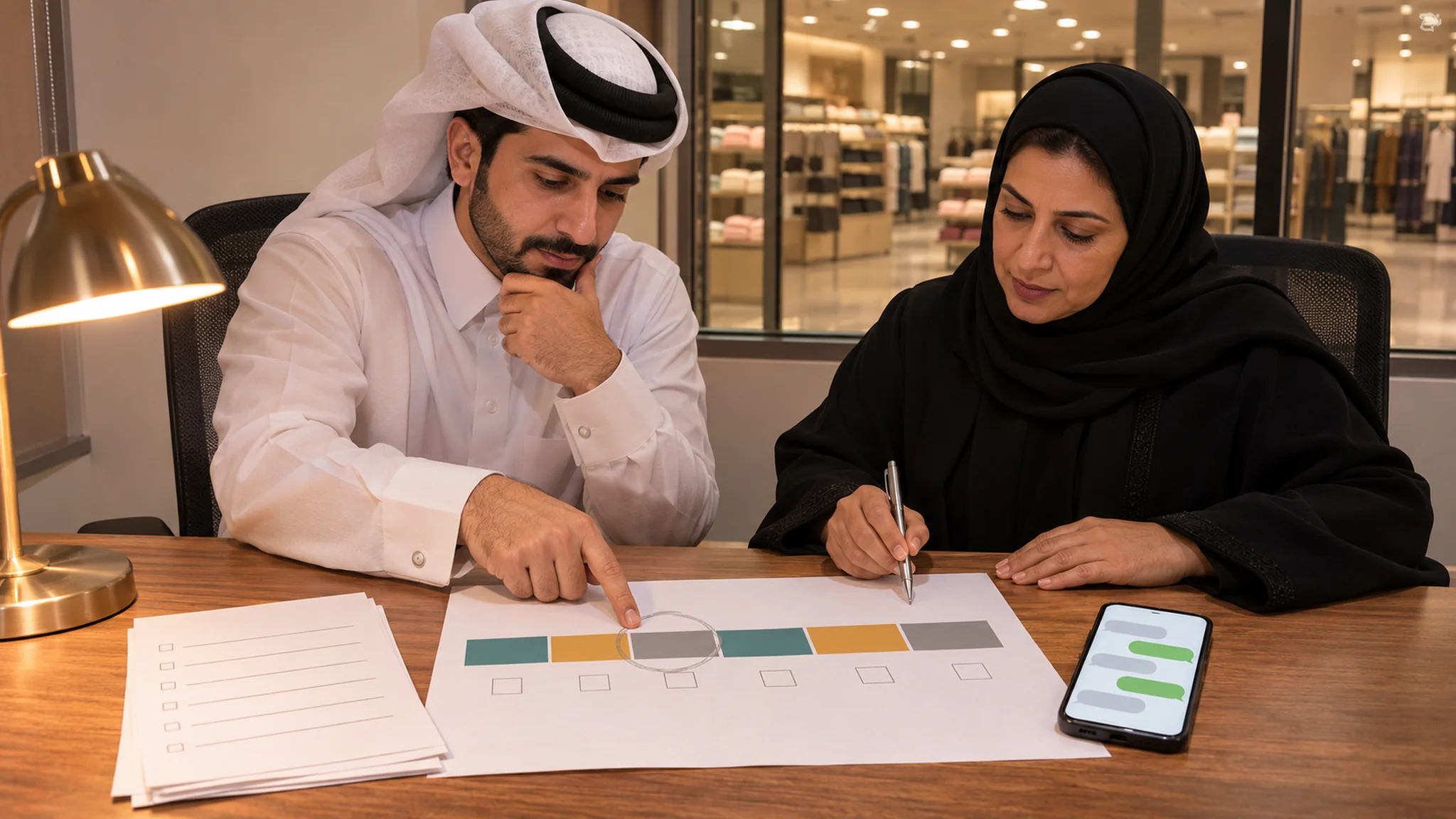
Rating the Plan and Writing It into the AgreementRate each of the three tests as ready, needs changes, or missing, and write one line of evidence beside each rating. For every ‘needs changes’, list the specific fix, such as an earlier first task, a review checklist, or fewer submissions during a busy month, and ask the training center to revise the plan before signing.
Then put the agreed plan into the contract or purchase order: tasks and dates, named reviewers and hours, the report the training center will send, and what happens when tasks are not submitted. A good rule is that the training center alerts the HR contact after a missed deadline, and the manager, not the trainer, follows up with the participant. The APS summary also suggests evaluating training methods for improvement, so ask the training center for a short review at the end of the follow-up period of which tasks worked and which did not.
A Hypothetical Example: Store Managers in a Doha Retail GroupThe following example is hypothetical and is included only to illustrate the method.
A retail group in Doha buys a coaching program for fourteen store managers. The training center proposes three tasks over six weeks: a coaching conversation summary in week one, a short recorded role-play with a team member in week three, and a reflection essay in week six, all reviewed by the trainer.
The HR manager applies the three tests. Test 1 rates the first two tasks as ready and the essay as weak, so it is replaced with a second conversation summary on a harder case. Test 2 shows forty-two reviews landing on one trainer within a few weeks, so the training center’s trainer reviews the first task and area managers review the rest with the same checklist after a thirty-minute briefing. Test 3 finds that week three falls in a major promotion, so that task moves to week four, and the role-play recordings are replaced with written summaries because team members did not consent to being recorded.
The revised plan goes into the purchase order, and the training center agrees to send a one-page status report every two weeks to the HR manager and the area managers.
SummaryA line about follow-up in a proposal is not a plan. Test the plan a training center proposes on three points: whether the post-course tasks are real work, who reviews them against what standard and with what time, and whether the plan fits your seasons, shifts, access rules and managers’ capacity.
Rate each test, ask the training center for specific fixes, and write the agreed plan into the contract. That small effort before signing is often what turns a well-delivered training program into a change people can see at work.
Click here. If you are reviewing the after-training plan in a proposal for your teams in Qatar and would like a second view, the SkillUp MENA team can discuss your corporate training requirements with you.