Loading...
Subscribe to Our Newsletter
Get the latest updates delivered straight to your inbox.

The ultimate L&D solution for upskilling your workforce.


© 2026 SkillUp MENA, Inc. All rights reserved
Subscribe to Our Newsletter
Get the latest updates delivered straight to your inbox.
The ultimate L&D solution for upskilling your workforce.
© 2026 SkillUp MENA, Inc. All rights reserved

 Share :


Soft Skills Training in Saudi Arabia: Choosing Feedback Scenarios to PractiseA front office supervisor at a hotel in Jeddah calls a new receptionist aside: ‘You need to be more professional with guests.’ The receptionist hears an attack on his character, insists he is always polite, and leaves upset. Nothing changes at the desk. The same supervisor could have said: ‘In your last three check-ins, you looked at the screen while the guest was talking and did not use their name. Two guests repeated their question.’ That version describes what happened, and it gives the receptionist something he can change tomorrow.
The difference between describing behaviour and judging the person is easy to explain and surprisingly hard to do under pressure. Much soft skills training covers feedback models on a slide, then moves on. People nod, agree, and return to labels such as ‘careless’, ‘negative ’, or ‘not a team player’ the next time they are frustrated.
This article is for HR teams and functional training owners in Saudi Arabia who want soft skills training that changes how feedback is actually given. It explains how to choose feedback scenarios worth practising, how to write role-play cards built on observable facts, and how to assess practice with a clear observation standard. The scenarios are hypothetical.
Why Describing Behaviour Is the Core of Soft Skills Training on FeedbackFeedback is not automatically helpful. In a large meta-analysis of 607 effect sizes, Kluger and DeNisi found that feedback interventions improved performance on average, yet more than a third of them reduced it. Their explanation is directly relevant to soft skills training: feedback appears to become less effective as it pulls attention away from the task and towards the self. A comment about who someone is does exactly that.
Practical feedback models are built to prevent this. The Center for Creative Leadership’s Situation-Behavior-Impact model asks the giver to describe the specific situation, then the actual, observable behaviour, keeping to the facts without opinions or judgements, then its impact, and finally to ask about the person’s intent. Knowing the model is the easy part. The skill is producing a factual description in the moment, which is why soft skills training has to be built around practice rather than explanation.
What Makes a Feedback Scenario Worth PractisingNot every situation deserves a place in soft skills training. Choose scenarios that meet most of these criteria:
The best source of scenarios for soft skills training is your own managers. Ask them which conversations they postpone or regret, and start from a performance problem your managers already report rather than from a generic list in a training manual.
A Starter Set of Feedback Scenarios for Saudi WorkplacesThe following six scenarios reflect situations common in Saudi organisations and can be adapted for soft skills training in most roles:
Include at least one positive case. Soft skills training often treats feedback as criticism only, yet a precise description of what worked is just as hard to give and just as useful.
Write Scenario Cards Built on Observable FactsIn soft skills training, each scenario becomes two cards. The feedback giver’s card contains:
The receiver’s card holds the other side: a reason or intent the giver does not know, and how the receiver will react if labelled rather than described. This hidden intent rewards participants who ask about it, as the SBI model suggests. Keep cards short, in the language the conversation would really happen in, and swap names and details so that no real colleague can be recognised.
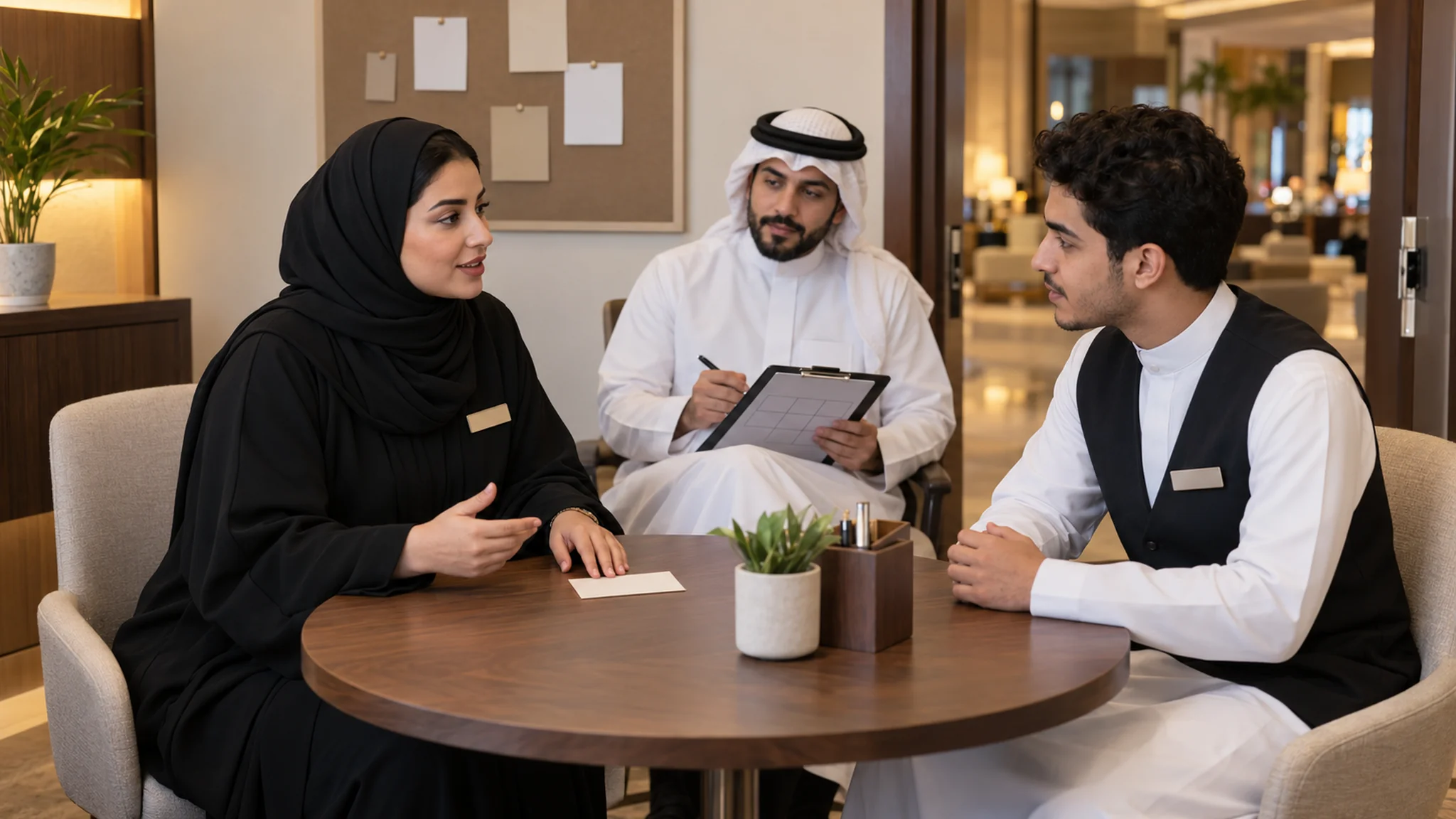
Run the Role-Play in Three RolesStart each soft skills training session with a ten-minute warm-up. Participants receive a list of judgement statements, such as ‘You don’t care about deadlines’, and rewrite each as a description of behaviour. Only then move to role-play in threes: giver, receiver and observer, rotating after each round.
Each round lasts five to seven minutes, followed by three minutes of observer feedback using the standard below, and then a second attempt at the same scenario. In soft skills training, the repeat matters most: participants hear what they did, then do it again better while the scenario is fresh. The same three-role format works well in other skills practice too, as in our article on practising needs discovery with Saudi retail teams.
An Observation Standard for Feedback PracticeEvery observer in the soft skills training needs a short, shared standard; otherwise comments drift into impressions such as ‘good tone’. Score each point as shown, partly shown, or not shown, and write down the giver’s exact words as evidence:
Use the same standard after the soft skills training, when managers observe or self-assess real feedback conversations. A standard that only exists in the classroom will not change behaviour at work.
Prepare the Observers Before Soft Skills Training BeginsObservers can make or break the practice. An observer who says ‘you were a bit harsh’ is doing exactly what the exercise is meant to stop: judging instead of describing. Before the first round of soft skills training, give observers fifteen minutes of their own preparation:
When participants rotate into the observer role, they apply the standard to someone else before using it on themselves, which is often where the difference between description and judgement finally becomes clear. Calibrated observers also make results comparable across groups when soft skills training runs in several locations.
A Hypothetical Example: Soft Skills Training for Hotel SupervisorsThis example is hypothetical and shows only how the elements fit together.
A hotel group with properties in Jeddah and Riyadh promotes several receptionists to front office supervisors. Guest comments suggest that their feedback to new staff is either avoided or delivered as criticism. The HR business partner and the rooms division manager agree to replace a general communication workshop with focused soft skills training on feedback.
The new supervisors list the conversations they find hardest. Five scenarios for the soft skills training are written from their answers, including a receptionist who does not use guests’ names, a colleague who leaves the shift without a handover note, and a positive case about a receptionist who handled a complaint well. Each supervisor completes four rounds in threes, repeating one scenario after feedback.
Over the following month, the rooms division manager observes one real feedback conversation per supervisor using the same six-point standard. Most now describe behaviour and impact clearly, but several still skip asking about intent, so the next session of the soft skills training focuses on that single step.
Questions to Ask Before Choosing Soft Skills Training on FeedbackWhether you build soft skills training internally or compare soft skills courses from providers, ask:
Soft skills training that cannot answer these questions clearly is likely to explain feedback well and change it very little.
SummaryFeedback helps when it describes what someone did and its impact, and it often backfires when it judges who they are. Soft skills training on feedback should therefore be built from scenarios that are frequent, observable and tempting to judge, written on cards that hold facts rather than labels.
Role-play in threes, a judgement-to-description warm-up and a shared observation standard turn a familiar model into a practised skill. That shift, moving employees from watching to practising, is what separates soft skills training that changes conversations from training that only explains them.
Click here. If you are shaping soft skills training on feedback for a particular role, you can talk the requirement through with the SkillUp MENA team.