Loading...
Subscribe to Our Newsletter
Get the latest updates delivered straight to your inbox.
The ultimate L&D solution for upskilling your workforce.


© 2026 SkillUp MENA, Inc. All rights reserved
Subscribe to Our Newsletter
Get the latest updates delivered straight to your inbox.
The ultimate L&D solution for upskilling your workforce.
© 2026 SkillUp MENA, Inc. All rights reserved


 Share :


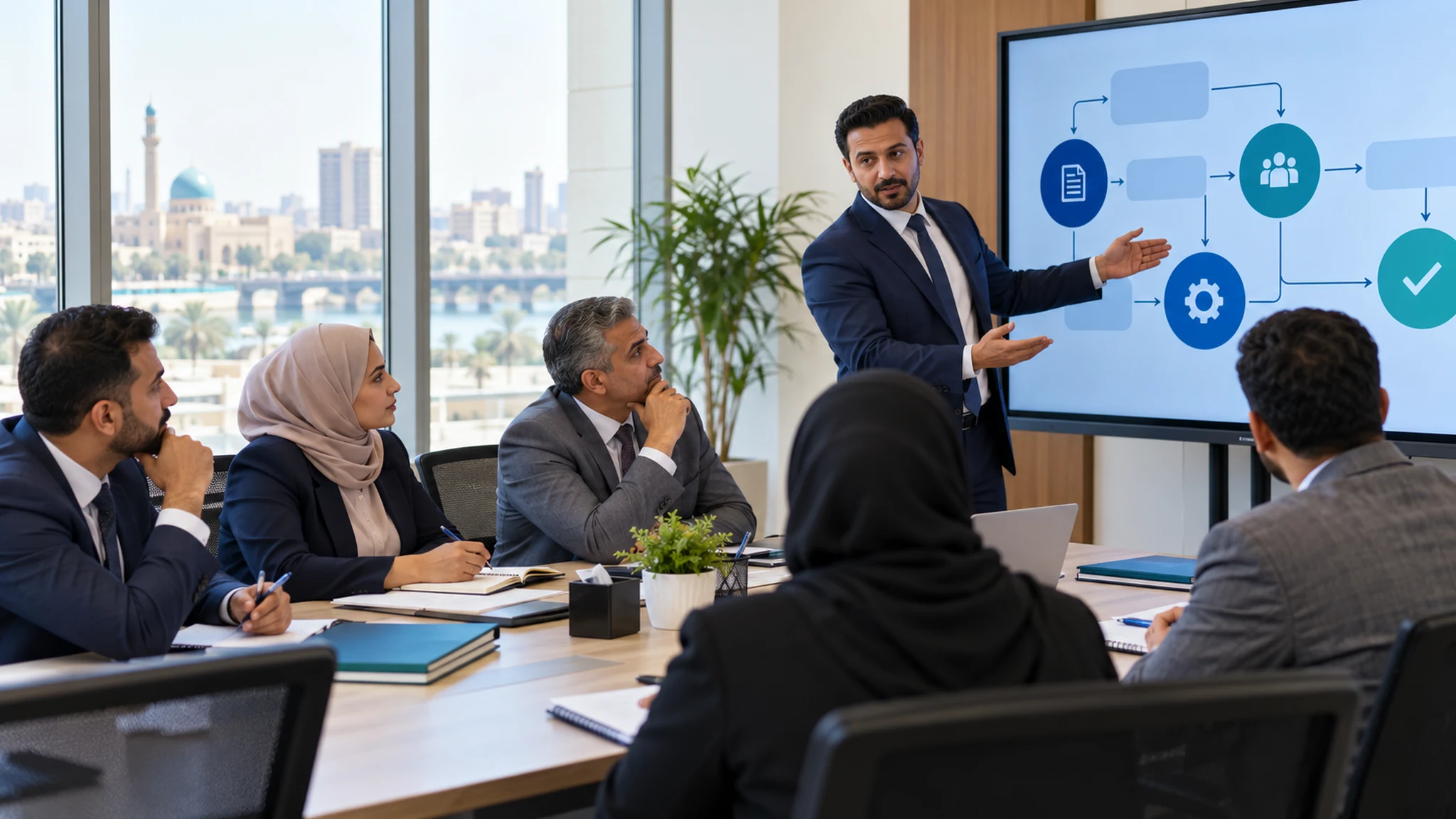
An organization can hold thousands of files and still depend on one employee to explain where the answer is and which version is trustworthy. Preserving institutional knowledge means reducing that dependency through information that the right people can find, understand and apply.
For Iraqi organizations, start with knowledge whose absence would interrupt work or increase the likelihood of repeated mistakes. This could include the reasoning behind a procedure, the history of a technical decision or the interpretation of an unusual request. File volume and popularity are poor substitutes for operational importance.
Bring process owners and experts together to identify tasks that regularly stop while someone waits for a particular person. Record where the knowledge currently resides, who needs it, what alternative exists and how difficult it would be to reconstruct.
Include knowledge without an official document. Some of it may live in individual notes, discussions or accumulated experience. Use approved interviews and task reviews to capture it openly, separating sensitive information from material suitable for broader learning.
Give each asset a user-friendly title and tags connected to tasks, systems and roles. Test search with the language employees actually use. Linking a relevant resource from the point of work may be more useful than adding it to a library the audience rarely visits.
Not everything an organization knows should be available to every employee. Classify assets and set access, editing and sharing rights according to business need and approved policies. Remove unnecessary personal or commercially sensitive information from recordings and screenshots.
Technical protection and content accuracy require different responsibilities. A technical owner manages appropriate backup, recovery and access arrangements. A content owner checks whether the resource still describes the approved way of working. A backup cannot correct an outdated procedure, and an excellent explanation cannot protect the only copy from being lost.
Use critical assets in onboarding, role transitions and practical learning pathways. Ask employees to solve a relevant problem with the resource, rather than simply confirm they have read it. This reveals whether the material supports a decision or only describes a topic.
Select a task that another employee can attempt using approved resources within suitable supervision and authority limits. Record where ambiguity remains and where verbal explanation is still required. The exercise provides more useful evidence of transfer than a count of archived pages.
Review assets when systems or procedures change. Show users the review date and provide a clear route for reporting an error. Begin with a small group of critical knowledge assets, then expand once search, use and ownership work reliably.