Loading...
Subscribe to Our Newsletter
Get the latest updates delivered straight to your inbox.

The ultimate L&D solution for upskilling your workforce.


© 2026 SkillUp MENA, Inc. All rights reserved
Subscribe to Our Newsletter
Get the latest updates delivered straight to your inbox.
The ultimate L&D solution for upskilling your workforce.
© 2026 SkillUp MENA, Inc. All rights reserved

 Share :


Start with the equipment, task and decision
Digitizing technical learning in Oman should begin with a defined task rather than a recording of an entire operating manual. Identify the equipment or system involved, the conditions under which the task is performed and the decisions that affect its quality.
General explanations can prepare employees for a role. They cannot, by themselves, establish readiness to work on a specific equipment version. Start with a bounded task such as interpreting a reading, documenting an inspection or handling a fault report. Have the operations owner confirm prerequisites, authority limits and escalation conditions before media production begins.
Match each asset to a capability
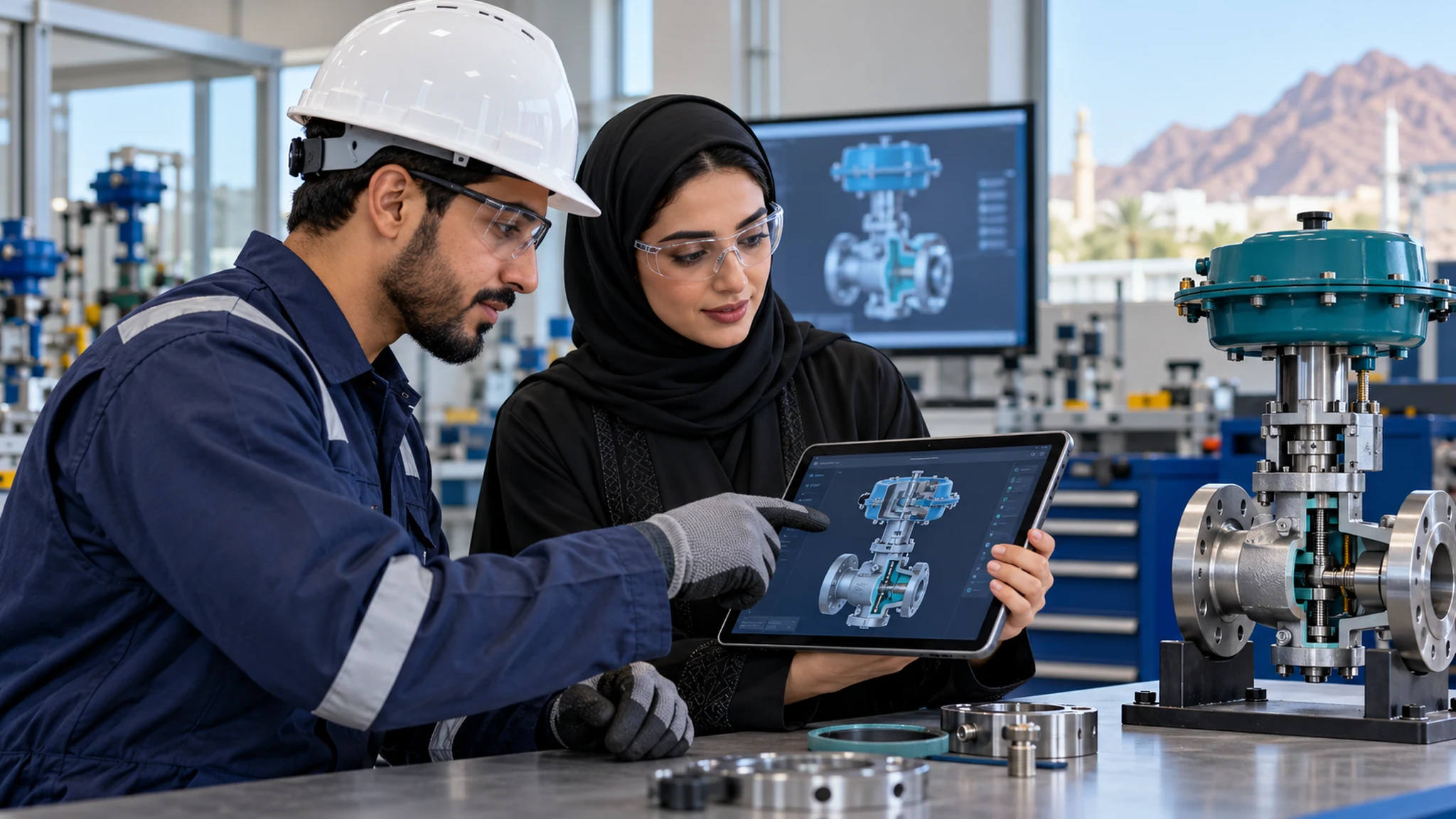
Use an annotated diagram to explain a concept, a short demonstration to show a sequence and a scenario to test judgment. Where the task requires physical interaction with equipment, retain safe supervised practice and observation by a qualified person under the organization’s procedures.
Each digital asset should have a defined job. A video prepares employees for practice. A simulation helps them explore relationships and decisions. A reference supports an approved procedure. Completing these assets or passing a knowledge test does not automatically authorize an employee to carry out a critical task.
Build a maintainable technical learning package
• A concise explanation of the concept, purpose and limits of use.
• A diagram or demonstration matched to the intended equipment.
• A decision scenario covering warning signs and escalation.
• A practice activity approved for the appropriate environment and supervision.
• An observation standard defining acceptable performance and critical errors.
• A quick reference showing its version and procedure owner.
Review images and diagrams with technicians, not just the script. A technically correct component name may differ from the name used at the site. Where useful, show both the approved term and its recognized workplace equivalent. Test whether important details remain readable when the image is viewed on an employee’s actual device.
Separate the shared core from site variations
Sites may share a technical principle while using different equipment, permissions or escalation arrangements. Keep the common explanation in one maintained asset and connect employees to the relevant equipment and site information.
This structure reduces duplicated production, but it depends on accurate audience rules. Test those rules with actual roles before launch. A well-produced asset assigned to the wrong equipment group can create confusion rather than consistency.
Connect technical change with content change
Maintain a record linking the official procedure to its video, assessment, demonstration and job aid. When the procedure changes, review the whole package. Updating the manual while leaving a previous instruction in a popular video creates an avoidable conflict at the point of work.
Verify readiness before scaling
Pilot with employees who represent the intended users. Review access, understanding and observed practice. Ask supervisors which errors remain and whether they relate to knowledge, equipment availability or opportunities to practice.
Compare performance against a consistent standard and record the equipment, task conditions and previous experience involved. Use the findings to improve the package before extending it to other tasks. The objective is a repeatable capability with a reliable update process.