Loading...
Subscribe to Our Newsletter
Get the latest updates delivered straight to your inbox.

The ultimate L&D solution for upskilling your workforce.


© 2026 SkillUp MENA, Inc. All rights reserved
Subscribe to Our Newsletter
Get the latest updates delivered straight to your inbox.
The ultimate L&D solution for upskilling your workforce.
© 2026 SkillUp MENA, Inc. All rights reserved

 Share :


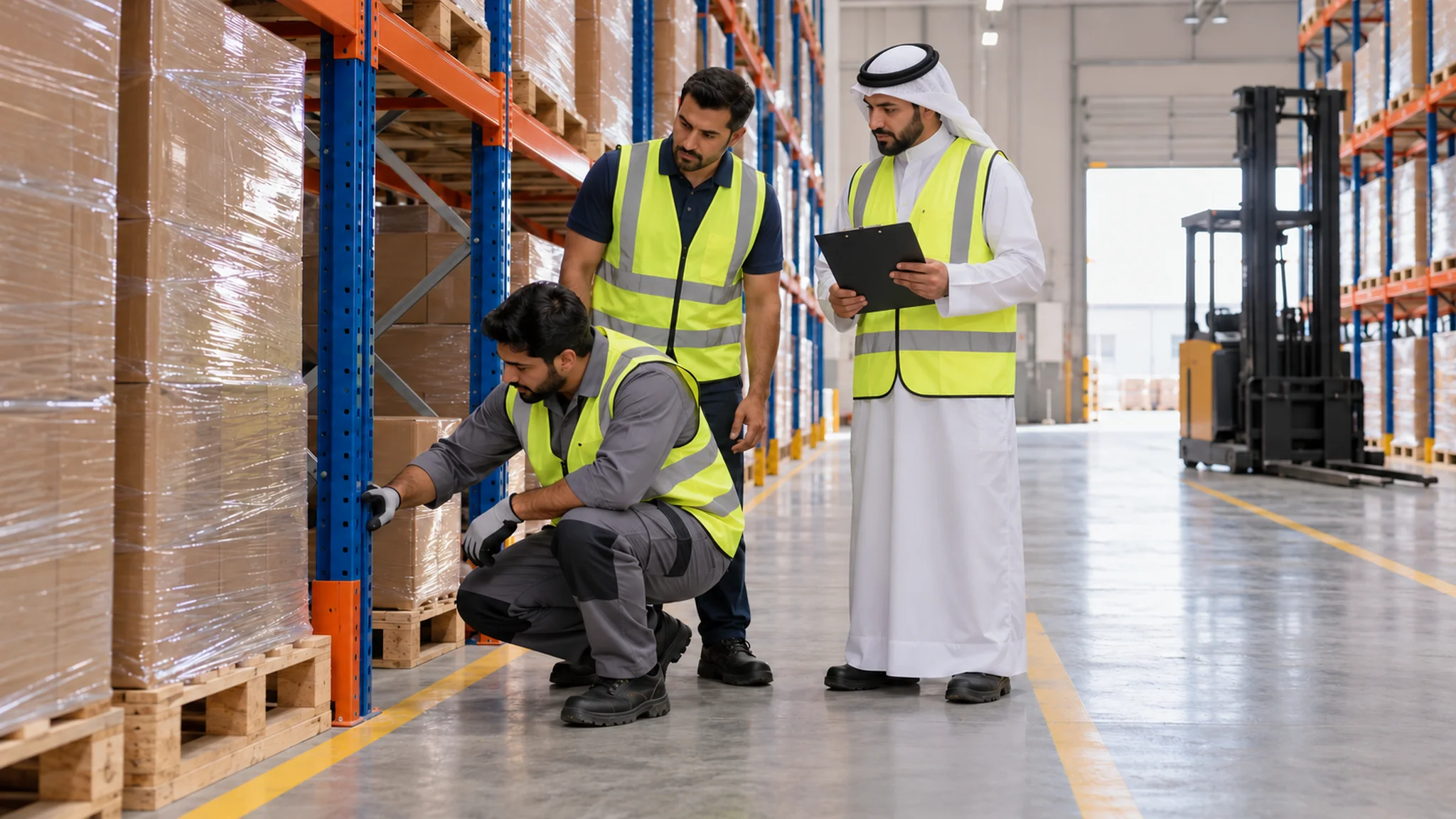
Evaluating a Health and Safety Course for Warehouse Teams in QatarPicture a logistics warehouse in Doha’s industrial area. Every picker, loader, and reach-truck operator holds a certificate from last year’s one-day health and safety course. Then, on a busy night shift, a reach truck reverses into a pedestrian walkway just as a picker steps out from between two racks. Nobody is hurt, but the supervisor’s report shows that the walkway markings had faded, that the picker did not know the reversing signal, and that the course had never left the training room.
The certificates were genuine. The course simply answered a different question. It showed that employees had attended a session on hazard categories, not that they could recognize and control those hazards in their own warehouse, on their own shift, with their own equipment. That gap is what HR and training owners need to examine before they buy warehouse safety training.
This article sets out four questions for evaluating a health and safety course for warehouse teams in Qatar: how much of it is practice, what role the supervisor plays, whether it reflects your work environment, and what its accreditation actually covers. It does not give safety, legal, or certification advice. Technical content and the requirements that apply to your site must be reviewed by a qualified HSE specialist.
Why a Certificate Is Not the Same as CompetenceWarehouses concentrate several hazards in one place. The U.S. Occupational Safety and Health Administration’s warehousing overview lists forklifts and other powered industrial trucks, ergonomics, material handling, hazardous chemicals, slips, trips and falls, and robotics. It names musculoskeletal disorders, mainly from lifting and lowering, and being struck by powered industrial trucks or other handling equipment among the most common injuries.
Most of these hazards are controlled through behavior repeated many times a shift: how a carton is lifted, where a pedestrian walks, when an operator stops. Britain’s Health and Safety Executive describes competence as the combination of training, skills, experience and knowledge a person has, and their ability to apply them to perform a task safely. A certificate is evidence of the first item on that list. A good health and safety course should help build the rest, and give you a way to see whether it has.
Question 1: How Much of the Course Is Practice?Ask the provider for a timed outline and calculate how much of the day employees spend doing rather than listening. For warehouse work, practice usually means manual handling with real loads, walking and checking pedestrian routes, inspecting pallets and racking for damage, responding to a spill, and walking an evacuation route from different parts of the building.
Regulators that govern equipment often expect this mix. In the United States, OSHA’s powered industrial truck standard requires operator training to combine formal instruction, practical training with trainer demonstrations and trainee exercises, and evaluation of the operator’s performance in the workplace. It is a U.S. rule, not a Qatari one, but it is a useful benchmark for what ‘practical’ should mean. Whatever applies to your site, equipment should be operated during training only by people authorized to do so, under direct supervision.
Ask, too, how the practical part of the health and safety course is assessed. A trainer who observes each person against stated criteria, such as lifting posture, route choice, or the order of checks on a damaged pallet, tells you far more than a written quiz at the end of the day.
Some warehouse tasks are team tasks, such as a two-person lift or guiding a vehicle through a tight dock. Ask whether the health and safety course practices that coordination, not just individual steps. Our article on when collaborative tasks add value to training explains when shared exercises are worth the extra effort.
Question 2: What Role Does the Supervisor Play?Supervisors decide whether training survives the first busy week. The HSE’s brief guide to health and safety training says managers and supervisors need to know what is expected of them and may need training in the specific hazards of the processes they oversee. It also stresses that new, inexperienced, or young employees should be adequately supervised.
Ask the provider three things. Does the health and safety course include a briefing for supervisors before the team is trained? Will supervisors receive a short observation checklist that matches what was practiced? And how will the provider support them in the weeks afterwards? A course that bypasses the supervisor leaves the most important reinforcement to chance.
Supervision matters most for people new to the site, including seasonal or temporary staff who join during peak periods. For that group, see our article on defining minimum readiness for seasonal employees in Qatar.
Question 3: Does the Course Reflect Your Work Environment?A generic health and safety course describes a generic warehouse. Yours has its own layout, equipment, products, and conditions. OSHA’s forklift standard is again a useful prompt: its workplace-related training topics include surface conditions, load stability, pedestrian traffic, narrow aisles, ramps, and closed areas where poor ventilation could cause a buildup of exhaust. Every one of those depends on the site.
In Qatar, the environment also includes conditions such as summer heat at loading docks, cold stores beside ambient areas, and night shifts. Ask whether the provider will visit the site before delivery, use your racking, equipment, and product types in exercises, and schedule sessions around shifts. The HSE guide notes that special arrangements may be needed for shift workers.
Language is part of the environment too. The same HSE guide says training should meet the needs of the whole workforce, including people who may not have good English and people with poor literacy. If your team works across several languages, ask how the course handles that: translated materials, demonstrations that rely less on text, or trainers who speak the team’s languages.
Question 4: What Does the Accreditation Actually Cover?Many providers describe a health and safety course as accredited or certified. Before that word influences the decision, ask three questions: accredited by whom, for what, and does it cover the provider, the course design, or the individual trainer? Then verify the claim directly with the body named, not only on the provider’s materials.
Even a genuine accreditation has limits. It may confirm that a syllabus was followed or that a learner passed an assessment; it does not show that an employee works safely in your warehouse. It also does not tell you whether a certificate satisfies any particular requirement in Qatar. That question belongs to your HSE specialist. Keep certificates as records of training, alongside evidence from supervisor observation; our article on recording external training certificates in a Qatar LMS covers the records side.
Why Technical Content Needs a Specialist ReviewHR and training owners can judge learning design: the share of practice, the role of supervisors, the language and the assessment. They should not be the ones to judge whether racking load limits, chemical storage rules, equipment checks or emergency procedures in a health and safety course are correct for the site.
Ask a qualified HSE specialist, internal or external, to review the technical content against your risk assessment and the requirements that apply to your operation, and to sign off any site-specific exercises. Agree this split before the course is bought, so the provider knows who will approve its material and when.
Give the specialist what they need to do that well: the provider’s full material, your site layout and equipment list, and your records of incidents and near misses. The HSE guide recommends reviewing experience of injuries, near misses or cases of ill health when deciding what training is needed, and the same records show whether the proposed exercises target the right risks.
A Hypothetical Example: A Logistics Warehouse in DohaThis example is hypothetical and is included only to illustrate the method.
A third-party logistics company runs a 40-person warehouse in Doha with ambient and chilled zones, two shifts, and reach trucks. After the near miss described above, the operations manager asks HR to replace last year’s course. HR receives two proposals.
Proposal A is a one-day classroom program with a certificate described as accredited; the provider cannot say by whom or what it covers. Proposal B combines a short classroom session with three hours of site-based practice, includes a one-hour supervisor briefing and an observation checklist, and starts with a site visit. HR shortlists B and asks the company’s external HSE consultant to review its technical content. The consultant corrects one racking inspection step and adds the chilled zone’s door procedures.
Six weeks after the health and safety course, shift supervisors observe each employee twice using the checklist, and HR reviews near-miss reports with the operations manager. The question is not how many certificates were issued, but whether people are working as they were trained.
SummaryEvaluating a health and safety course for warehouse teams in Qatar means looking past the certificate. Ask how much of the course is practice, how supervisors are prepared and involved, whether the content reflects your layout, equipment, shifts and languages, and exactly what any accreditation covers.
Leave the technical content to a qualified HSE specialist, and measure success through what supervisors observe on the warehouse floor. That combination is what turns a health and safety course from a record of attendance into safer daily work.
Click here if you want Skillup MENA to help you.