Loading...
Subscribe to Our Newsletter
Get the latest updates delivered straight to your inbox.

The ultimate L&D solution for upskilling your workforce.


© 2026 SkillUp MENA, Inc. All rights reserved
Subscribe to Our Newsletter
Get the latest updates delivered straight to your inbox.
The ultimate L&D solution for upskilling your workforce.
© 2026 SkillUp MENA, Inc. All rights reserved

 Share :


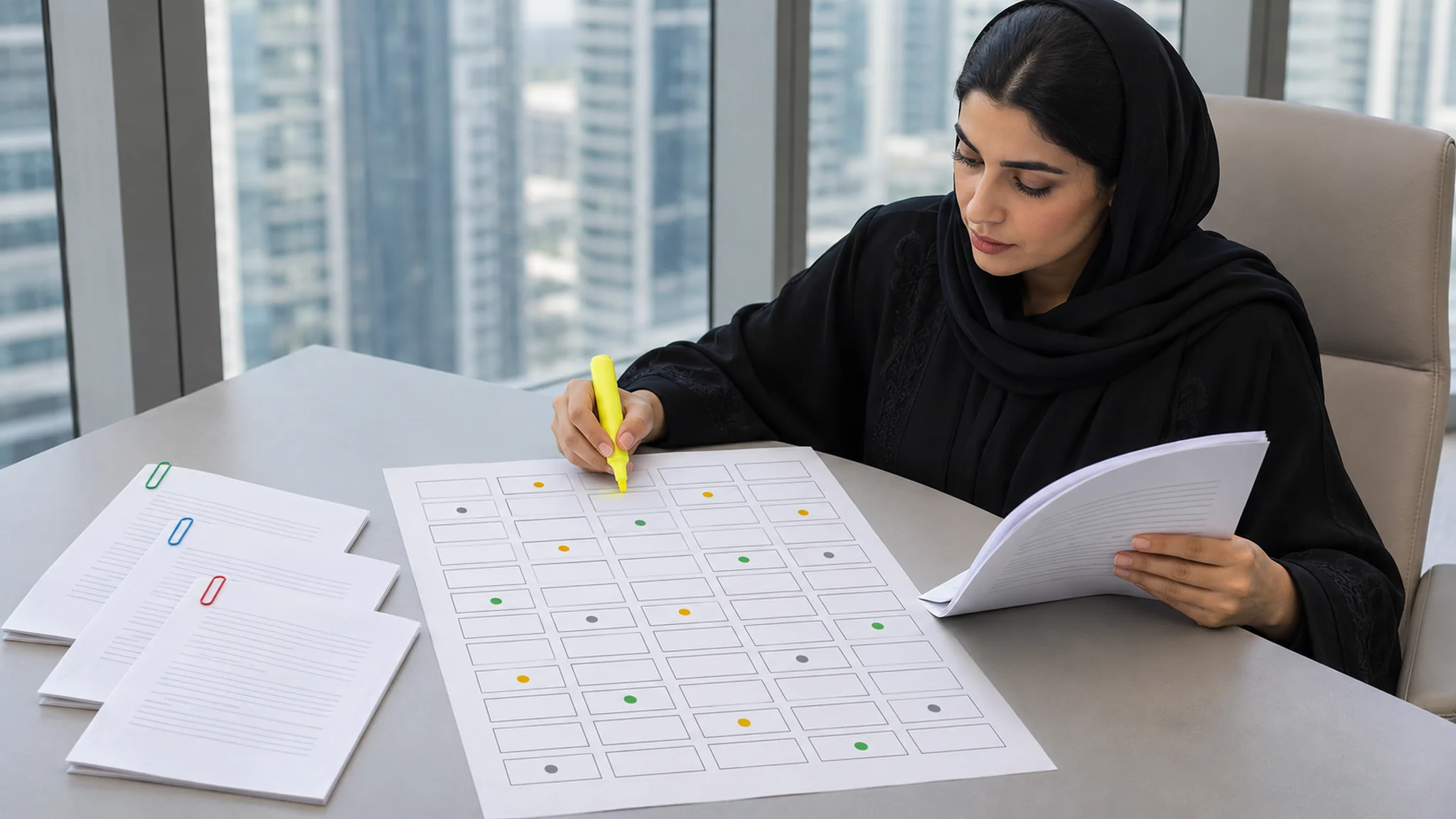
Choosing a Corporate Training Center in Dubai: Comparing ScopeAn HR manager at a logistics company in a Dubai free zone receives three proposals for a business writing program for operations coordinators. Each training center promises a ‘fully customized’ program, an ‘expert trainer’ and ‘post-training support’. Read one after another, all three sound complete. Only when they are laid side by side does it become clear that one includes needs interviews and rewritten exercises, one changes little beyond the cover page, and one says nothing about what happens after the last session.
The words are similar because every training center writes for many clients. The scope behind the words is what differs, and it rarely shows until you put the same questions to every proposal and record the answers in one place.
This guide shows HR and procurement teams in Dubai companies how to build a side-by-side scope comparison sheet for choosing a corporate training center. It covers the rows to include for the trainer, content, customization, evaluation and follow-up, one row that is specific to Dubai, and how to read the finished sheet. Price comes later.
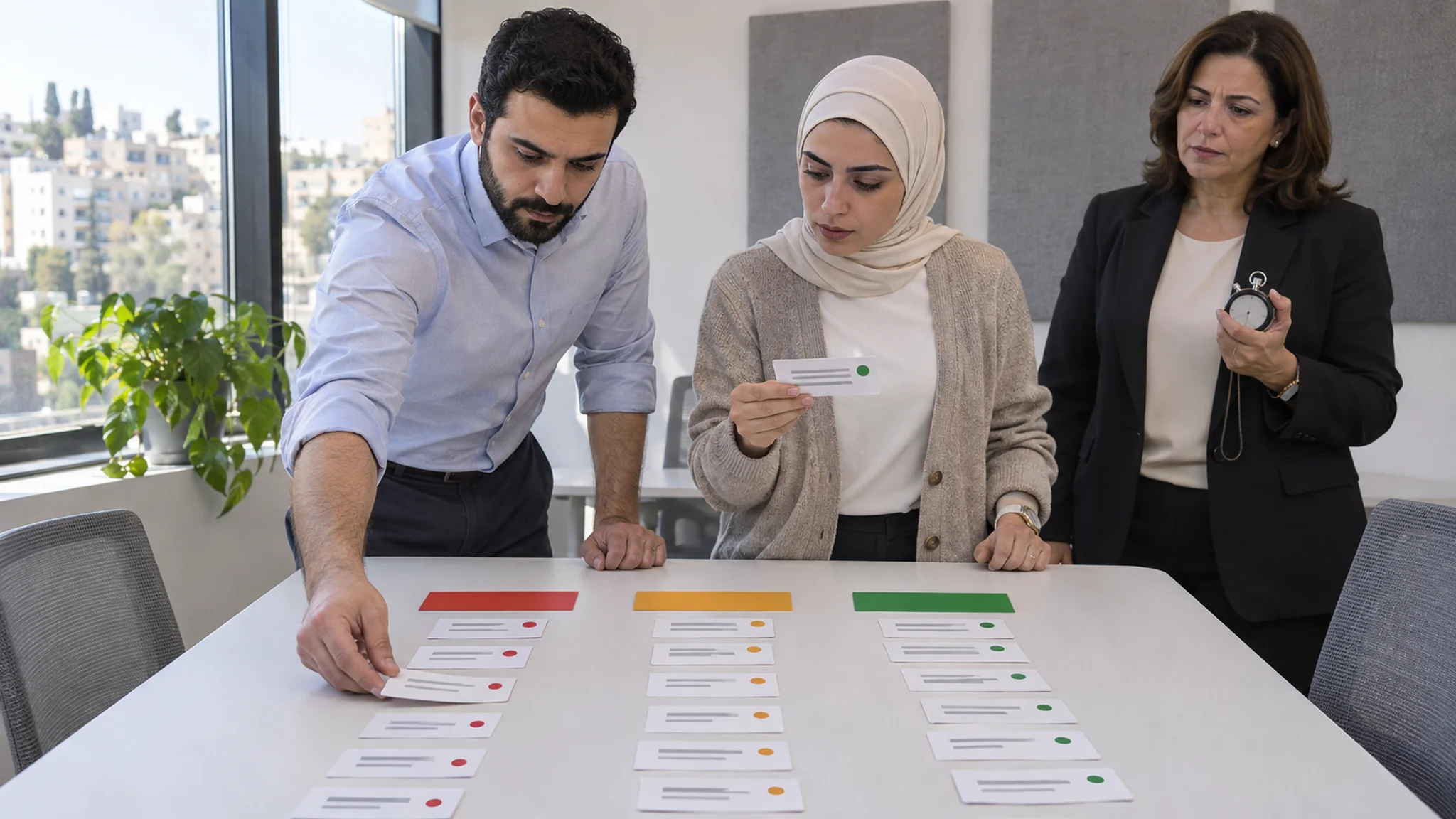
Build the Sheet Before You Open Any Training Center ProposalThe rows of the sheet come from your requirements, not from the proposals. If you build the rows after reading the offers, the best-written proposal sets the agenda. Write each requirement as a short line, put one training center in each column, and decide in advance how you will fill the cells. Four codes are enough:
Beside every code, note the page or section of the proposal that supports it. That reference is what makes the sheet useful in a meeting: anyone can check the evidence instead of relying on memory. If your requirements are still a list of course titles, settle the priorities first; our guide to turning course requests into priorities explains how.
Who Fills the SheetAsk two or three people to fill the sheet separately: someone from HR or procurement, the line manager whose team will attend and, if possible, a subject-matter expert. Compare their codes afterwards. Where they disagree about what a training center has committed to, the proposal is usually ambiguous, and that ambiguity is itself a clarification question.
Keep the process fair. Send every training center the same requirements and the same clarification answers, and never share one provider’s proposal content with another. The sheet is an internal working document, not something to circulate to bidders.
Rows for the Trainer Each Training Center ProposesThe trainer is often the largest difference between two offers, and the one least visible in a brochure. Add rows for:
A training center that names the trainer and describes the preparation in its proposal gives you something you can hold it to. One that leaves the trainer open until after signature is offering a different product, even if the price looks similar.
‘Customized’ is the most stretched word in training proposals. Split it into rows that show what will actually change:
These rows usually reveal three levels of customization: cosmetic, where only names and logos change; contextual, where examples come from your sector; and built-in, where exercises are designed around your actual work. None is wrong in itself, but they are different scopes. Ask each training center to state which level it proposes for your most important task, and record the answer in its own row. For a related view on fit with administrative work, see our article on selecting administrative team training in Abu Dhabi.
Rows for Evaluation and Follow-UpProposals often mention evaluation in one line. Turn it into rows that show what each training center will actually measure and report:
Follow-up deserves its own rows, because ‘post-training support’ can mean anything from an email address to a structured program:
A Row Specific to Dubai: The Provider’s AuthorizationAdd one row that is easy to overlook. Dubai’s Executive Council Resolution No. (50) of 2015 regulates training institutes in the Emirate. According to the published text, no one may offer training activities to others in Dubai without an authorisation issued by the KHDA, and a training institute may not offer a training programme that is not stated in its authorisation. The resolution applies in free zones such as the DIFC, and it does not apply to private entities that train their own employees themselves.
In the sheet, ask each training center to confirm that its authorization covers the type of program it is proposing, note whether the training center supplied the details in writing, and check the answer with the KHDA if anything is unclear. Requirements can change, so confirm the current position with the authority rather than relying on this summary; this row records a fact, not a legal opinion.
Reading the SheetOnce the cells are filled, read the sheet in three passes:
‘Not mentioned’ is not the same as ‘no’. Send the clarification questions, update the sheet with the answers, and only then decide which proposals stay on the shortlist. When two offers are close in scope, the next step is normalizing two offers before comparing price, which levels practice time, assessment, and support so that the price comparison is fair.
A Hypothetical Example: Operations Coordinators at a Dubai Free-Zone The following example is hypothetical and is included only to illustrate the sheet.
The logistics company from the opening needs its operations coordinators to write clear shipment-exception emails to clients: what happened, what it means for the client, and what happens next. The HR manager writes fourteen rows before opening any proposal, then fills one column per training center.
The first training center, in column A, is ‘included as specified’ for most trainer rows and names a trainer with freight-forwarding experience, but its follow-up rows are ‘not mentioned’. The second training center, in column B, offers the most follow-up, a clinic after four weeks and email templates, yet its exercises are generic business-writing cases: ‘included differently’ on customization. The third training center, in column C, changes only examples and logos, and its authorization row is blank, which becomes a clarification question.
The sheet does not choose the winner. It produces six written questions: follow-up for A, rebuilt exercises for B, and authorization and trainer details for C. Two weeks later, the answers turn two ‘not mentioned’ cells into firm commitments, and the shortlist is A and B.
SummaryProposals in Dubai often use the same words for very different scopes. A side-by-side sheet built from your own requirements, with rows for the trainer, content and customization, evaluation, follow-up and authorization, shows what each training center has actually committed to.
Fill the cells with evidence from every training center proposal, treat silence as a question rather than an answer, and update the sheet before shortlisting. The corporate training provider you choose will then be the one whose scope fits your needs, not the one whose proposal reads best.
Click here if you want Skillup MENA to help you.